Top 10 Best Value Bench Grinder Deals
The best value bench grinder matters because sharpening, shaping, and deburring depend on more than raw motor power. In modern workshops, wheel speed, balance, and housing stability all influence how cleanly a grinder handles steel, carbide, and everyday tool maintenance. The best value bench grinder is not simply the cheapest option; it reflects thoughtful engineering, safer operation, and steady performance under load.
Bench grinder value comes from features like cast-iron bases, adjustable tool rests, spark deflectors, and efficient induction motors that reduce vibration and improve control. Across grinder performance, wheel compatibility, and workshop safety, small design choices can make a major difference.
The challenge is separating true bench grinder quality from flashy specs, and the models ahead reveal which details really matter.
Detailed Overview of the Best Value Bench Grinder
1. DEWALT DW758 8-Inch Bench Grinder

- 3/4 HP induction motor of the bench grinder provides superior power for industrial grinding applications
- Rugged cast iron base and motor housing of the 8-inch bench grinder provide durability and prolonged life
- Table grinder motor runs at 3,600 rpm for high-speed material removal

Best for: High-power shop workhorse.
A 3/4 HP induction motor and 8-inch wheels give the DEWALT DW758 the muscle for heavy material removal and larger grinding jobs. The cast iron base and motor housing add mass that helps the grinder stay steady during aggressive passes, while the 3,600 rpm speed keeps stock coming off quickly for sharpening, shaping, and cleanup work.
The 17.75 x 12.63 x 11.73-inch footprint fits a bench without taking over the whole workspace, yet the 12-1/2-inch distance between wheels leaves room for longer pieces. Precision-machined aluminum tool rests help you place work accurately, which matters when you want a cleaner edge and less wandering. Rear exhaust ports in the wheel guards move air out more smoothly, helping the grinder run with less turbulence around the wheels. Corded electric power keeps output consistent for repeated metalwork, and the 8-inch format gives more contact area than a smaller grinder for broad edges and larger tools.
Pros
- 3/4 HP induction motor handles industrial grinding loads
- 8-inch wheel size suits larger tools and longer edges
- Cast iron base and housing add stability during heavy passes
- Precision-machined aluminum tool rests improve work positioning
Cons
- No variable-speed control, so the 3,600 rpm output is fixed for every task.
For buyers who want straightforward power and a larger grinding surface, this DEWALT makes a strong value case. It suits a shop that needs fast stock removal and stable support more than fine speed control.
| Specification | Details |
|---|---|
| Brand | DEWALT |
| Material | Cast Iron |
| Product Dimensions | 17.75″L x 12.63″W x 11.73″H |
| Style | Bench Grinder |
| Power Source | Corded Electric |
| Motor Power | 3/4 HP |
| Wheel Size | 8-inch |
| Speed | 3,600 rpm |
| Distance Between Wheels | 12-1/2-inch |
I’d steer toward this grinder if your work leans toward heavier bench tasks, frequent sharpening, or shaping larger pieces. The cast iron body, higher wheel speed, and wide wheel spacing make it feel more like a shop tool than a hobby accessory. If you want simple, reliable grinding without extra controls, this is an easy pick.
2. JET 6-Inch Bench Grinder w/ Wire Wheel, 3450 RPM, 115V

- 1/2 HP MOTOR IN A CAST-IRON BODY — A 1/2 HP, 115 V induction motor runs at 3,450 RPM on totally enclosed, pre-lubricated ball...
- TWO WHEELS, TWO JOBS — A 6" 36-grit aluminum oxide wheel shapes and sharpens on one side; a 6" crimped wire wheel cleans rust...
- MADE FOR STEEL, NOT ALUMINUM — Use it on steel and iron tools and parts: chisels, mower blades, drill bits, welds and fasteners...
Best for: Compact dual-wheel shop helper.
A 6-inch grinder with both a vitrified aluminum oxide wheel and a crimped wire wheel gives the JET two jobs in one compact frame. The 1/2-HP motor spins at 3,450 RPM, so it has enough pace for sharpening and cleaning while the smaller footprint keeps it practical for crowded workbenches and smaller shops.
The 13.5 x 11 x 10.75-inch body is easy to place where bench space is limited, and the pre-drilled base makes mounting simpler when you want a fixed setup. Heavy-duty cast iron construction supports demanding environments, which matters if the grinder will live in a garage or fabrication area. Cast iron wheel guards and dust ports help contain debris at the wheel area, while adjustable eye shields and spark guards add useful coverage during everyday grinding. Totally enclosed, pre-lubricated ball bearings reduce maintenance demands and keep motion smoother over time. The included 36-grit wheel gives you aggressive removal, while the wire wheel broadens the machine’s usefulness.
Pros
- 6-inch format saves bench space
- 36-grit wheel handles aggressive shaping and cleanup
- Crimped wire wheel adds brushing and surface prep
- Pre-drilled base supports secure mounting
Cons
- The 6-inch wheel size gives less grinding surface than larger 8-inch models.
This JET makes sense for buyers who want a compact grinder with both grinding and brushing capability. It is a practical value if you need one machine for mixed shop tasks and limited space.
| Specification | Details |
|---|---|
| Brand | Jet |
| Material | Alloy Steel, Cast Iron |
| Product Dimensions | 13.5″L x 11″W x 10.75″H |
| Style | Grinder |
| Power Source | Corded Electric |
| Wheel Size | 6-inch |
| Motor Power | 1/2-HP |
| Speed | 3,450 RPM |
| Included Wheels | 36-grit vitrified aluminum oxide wheel, crimped wire wheel |
I like this one for a small shop or garage where every inch of bench space matters. The included wire wheel adds real utility, so you are not buying a single-purpose grinder. If you want a compact machine that still feels useful for daily maintenance work, this is a smart value.
3. Woodskil Digital Display 8″ Variable Speed Bench Grinder for Knife,3/4HP,5A
- Advanced Digital Display: Experience the ease and accuracy of our bench grinder, featuring a digital display that provides...
- Variable Speed: Equipped with a robust 5 Amp 3/4HP motor, our bench grinder provides variable speed from 2000-3450RPM, ensuring...
- Work Light: Our bench grinder comes with a built-in 2W work light, providing clear and bright illumination of your workspace. It...
Best for: Precision-focused variable-speed pick.
An 8-inch bench grinder with a digital display gives the Woodskil a clear edge for users who want to match speed to the task. The 3/4 HP, 5-amp motor moves from 2,000 to 3,450 RPM, letting you slow down for control or speed up for faster shaping without guessing at the setting.
The digital readout provides real-time speed feedback, which is useful when you want repeatable results on knives, tools, or metal edges. At 17.32 x 10.24 x 13.39 inches, it keeps a full-size wheel setup without demanding an oversized footprint. The corded electric power source gives consistent output, and the cast iron construction adds weight that helps the grinder stay composed during longer sessions. A built-in 2W work light improves visibility at the wheel, which matters when you are checking edge symmetry or working in a dim garage. The angled style also makes the machine easier to use for focused sharpening work.
Pros
- Digital display shows speed in real time
- 2,000-3,450 RPM range supports different materials
- Built-in 2W work light improves visibility
- 8-inch wheel format suits larger sharpening tasks
Cons
- The angled body takes more vertical space than lower-profile bench grinders.
For buyers who care about control as much as power, this Woodskil offers useful speed feedback and flexible operation. It is a strong value when you want one grinder that can shift between careful sharpening and quicker removal work.
| Specification | Details |
|---|---|
| Brand | Woodskil |
| Material | Cast Iron |
| Product Dimensions | 17.32″L x 10.24″W x 13.39″H |
| Style | Angled |
| Power Source | Corded Electric |
| Motor Power | 3/4 HP |
| Motor Current | 5 Amp |
| Speed Range | 2,000-3,450 RPM |
| Display | Digital display |
| Work Light | 2W work light |
I would pick this if I wanted a grinder that feels more precise than basic fixed-speed models. The display takes the guesswork out of speed selection, and the work light is genuinely handy for detail work. It suits users who sharpen frequently and want better control over heat and edge finish.
4. JET 8″ Bench Grinder with Wire Wheel – 1 HP,

- 1 HP MOTOR, CAST-IRON BUILD: A 1 HP capacitor-start induction motor drives both 8-inch wheels at 3,450 RPM. The base, motor...
- TWO WHEELS, TWO JOBS: The left side carries an 8 x 1 in., 36-grit vitrified aluminum oxide grinding wheel for shaping, stock...
- MADE FOR STEEL, NOT ALUMINUM: Use it to sharpen chisels, screwdrivers and drill bits, remove excess metal, and smooth metal...
Best for: Heavy-duty 8-inch dual-wheel option.
A 1 HP induction motor driving two 8-inch wheels makes this JET a serious grinder for frequent shop use. The cast-iron base, motor housing, inner wheel guards, and tool rests give the machine the mass and structure needed for steady grinding, while the 54-pound weight helps it stay planted under pressure.
Both wheels spin at 3,450 RPM, so you get fast removal without switching machines for routine shaping or edge restoration. The left side uses an 8 x 1-inch 36-grit vitrified aluminum oxide wheel for aggressive work, while the right side carries an 8 x 1/2-inch crimped wire wheel for cleaning and surface prep. Four rubber feet help control movement on the bench, which is useful when you lean into the wheel on larger stock. The 22.24 x 8 x 13.1-inch dimensions give a long, narrow footprint that fits along a bench edge while still offering a full-size wheel setup.
Pros
- 1 HP motor supports heavier grinding jobs
- 8-inch wheels provide broad contact and strong removal
- Separate grinding and wire wheel expand versatility
- 54-pound mass helps limit movement during use
Cons
- No variable-speed control, so both sides run at a fixed 3,450 RPM.
This grinder suits buyers who want a robust dual-wheel machine for regular metalwork. It brings the power and stability of a larger shop tool without adding unnecessary complexity.
| Specification | Details |
|---|---|
| Brand | Jet |
| Material | Alloy Steel, Cast Iron |
| Product Dimensions | 22.24″L x 8″W x 13.1″H |
| Style | Grinder |
| Power Source | Corded Electric |
| Motor Power | 1 HP |
| Wheel Size | 8-inch |
| Speed | 3,450 RPM |
| Weight | 54 lb |
I see this as a good fit for a user who wants an 8-inch grinder that feels substantial from the first use. The dual-wheel setup saves bench space compared with separate machines, and the heavy cast-iron build helps when the work gets more aggressive. If you do regular restoration or fabrication, it brings good value in a straightforward package.
5. WEN BG625V 2.5-Amp 6-Inch Variable Speed Bench Grinder with Flexible

- 2.5-amp variable speed motor goes anywhere from 2000 to 3400 RPM
- Perfect for reviving old tools, knives, bits and more
- Flexible work light illuminates your project during operation
Best for: Variable-speed all-around workshop grinder.
A 2.5-amp motor with 2,000 to 3,400 RPM control gives the WEN a flexible speed range for reviving tools, knives, bits, and general shop parts. The 6-inch size keeps it compact, while the flexible work light helps you see the edge or surface you are working on without moving the grinder around the bench.
This model includes one 80-grit wheel and one 36-grit wheel, so you can move from finer cleanup to more aggressive shaping on the same machine. Pivoting tool rests help support different work angles, and the adjustable eye guards add an extra layer of protection when sparks and grit start moving. The 15.35 x 9.65 x 17.32-inch dimensions give it a manageable footprint with a taller profile for lighting and access. Metal construction keeps the frame practical for everyday use, and the corded electric power source maintains steady output for repeated grinding sessions. The variable-speed layout is the key value feature for users who want more than one operating feel from a small grinder.
Pros
- 2,000-3,400 RPM range supports different tasks
- 80-grit and 36-grit wheels increase versatility
- Flexible work light helps with visibility
- Pivoting tool rests improve support at different angles
Cons
- The 6-inch wheel size offers less working surface than an 8-inch grinder.
This WEN makes the most sense for buyers who want one compact grinder for mixed bench tasks. The variable speed and two included wheels make it easy to cover sharpening, cleanup, and light shaping without overbuying.
| Specification | Details |
|---|---|
| Brand | WEN |
| Material | Metal |
| Product Dimensions | 15.35″L x 9.65″W x 17.32″H |
| Style | Variable Speed |
| Power Source | Corded Electric |
| Motor Current | 2.5 Amp |
| Speed Range | 2,000 to 3,400 RPM |
| Included Wheels | 80-grit wheel, 36-grit wheel |
| Work Light | Flexible work light |
I think this is a good value for someone who wants flexibility without stepping up to a larger machine. The two wheels and speed range make it more useful than a basic fixed-speed grinder for home shops. It should satisfy users who sharpen a mix of tools and want a compact setup with helpful extras.
6. BUCKTOOL 8″ 1/2HP Dual Speed Bench Grinder Buffer Combo with
- 1/2HP dual-speed induction motor with smooth performance and steady torque at both low and high speed. Slow speed is ideal for...
- Includes 80 grit and 120 grit white aluminum oxide wheel which can reduce heat build-up
- Two pieces of cast aluminum tool rests can independently adjustable to compensate for wheel wear and to achieve different angles
Best for: Dual-speed metal removal and sharpening.
A 1/2 HP dual-speed induction motor gives the BUCKTOOL a practical split between slow sharpening and faster stock removal. The 8-inch wheels and white aluminum oxide grits keep the machine focused on shop use, while the cast iron base helps hold it steady when you switch between tasks.
This grinder includes 80-grit and 120-grit white aluminum oxide wheels, which are useful for reducing heat build-up while working on edges and tools. The two cast aluminum tool rests adjust independently, so you can compensate for wheel wear and set different angles without moving the whole machine. A sturdy cast iron base with mounting holes helps prevent wobbling and walking on the bench, which matters when you are grinding longer or harder pieces. The 16.93 x 10.63 x 16.54-inch dimensions give it a fuller footprint than a compact 6-inch unit, but that extra size supports the larger wheel format and the buffer-combo layout.
Pros
- Dual-speed motor separates sharpening from faster removal
- 8-inch wheels provide more working area
- 80-grit and 120-grit wheels reduce heat build-up
- Adjustable cast aluminum rests support different angles
Cons
- The larger 16.93-inch length takes more bench space than compact 6-inch grinders.
This BUCKTOOL is a strong value if you want an 8-inch grinder that can handle both careful sharpening and quicker material removal. The adjustable rests and stable base make it especially practical for repeat shop use.
| Specification | Details |
|---|---|
| Brand | Bucktool |
| Material | Iron |
| Product Dimensions | 16.93″L x 10.63″W x 16.54″H |
| Style | 8″ Dual Speed |
| Power Source | Corded Electric |
| Motor Power | 1/2HP |
| Wheel Size | 8-inch |
| Included Wheels | 80 grit and 120 grit white aluminum oxide wheel |
| Tool Rests | Two pieces of cast aluminum tool rests |
I’d recommend this to someone who wants a more versatile grinder without jumping into a premium setup. The dual speeds and finer wheel combination make it especially attractive for sharpening and edge work. If you want one machine that can do both careful and aggressive grinding, it is easy to like.
7. 6-Inch Variable Speed Bench Grinder with Grinding Wheel Dresser, 1725–3450

- 【Powerful Brushless Motor — Bench Grinder Performance】The 2.5A brushless induction motor delivers steady torque, quieter...
- 【Wide Variable Speed (1725–3450 RPM) — For Sharpening, Grinding & Metalwork】 Easily dial in the right speed for any...
- 【User-Friendly Adjustments — Designed for DIY & Workshop Use】 Tool-free adjustable guides, a stable work rest, a water tray...
Best for: Compact brushless speed control.
A 2.5A brushless induction motor and 1725 to 3450 RPM range give this 6-inch grinder a broad operating window for sharpening, grinding, and polishing. The brushless design adds quieter running and steady torque, which makes it useful when you want a smaller bench grinder that still feels controlled across different workshop tasks.
The included 36-grit and 60-grit wheels cover fast removal and more refined grinding, so you do not have to start with one coarse option only. At 14 x 11 x 10 inches, it is the smallest footprint in this group, which helps if your bench space is tight. The green finish is easy to spot in a busy shop, and the corded electric power source keeps output consistent for repeated use. Because the motor runs across a wide speed band, you can slow down for careful work and speed up when you need more aggression. The grinder suits general DIY users who want one compact machine for several tasks.
Pros
- Brushless induction motor supports quieter operation
- 1725-3450 RPM range handles multiple tasks
- 36-grit and 60-grit wheels cover rough and finer work
- Small 14 x 11 x 10-inch footprint saves bench space
Cons
- The 6-inch wheel size limits surface area compared with larger 8-inch grinders.
This Greteefor is a smart buy for a small workspace that still needs flexible grinding control. It packs useful speed range and two wheels into a compact frame, which makes it easy to live with on a crowded bench.
| Specification | Details |
|---|---|
| Brand | Greteefor |
| Product Dimensions | 14″L x 11″W x 10″H |
| Style | Variable Speed Bench Grinder( 1725 -3450 RPM) |
| Power Source | Corded Electric |
| Color | Green |
| Motor Type | Brushless induction motor |
| Motor Current | 2.5A |
| Speed Range | 1725–3450 RPM |
| Included Wheels | 36-grit and 60-grit grinding wheels |
I’d point a space-conscious buyer toward this model first. The footprint is compact, but the speed range and wheel pairing make it useful for more than one job. It feels like the right choice if you want a bench grinder that can live in a small shop and still get real work done.
8. RIKON 80-805 Professional 8-Inch Low Speed Bench Grinder, 1/2 HP,
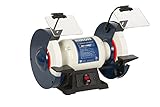
- LOW-SPEED SHARPENING: 1/2 HP motor runs at 1,750 RPM to help reduce heat buildup during sharpening and provide controlled...
- TWO GRINDING WHEELS: Includes 8" x 1" 60- and 120-grit wheels on a 5/8" arbor for rough grinding, shaping and finer sharpening.
- ADJUSTABLE TOOL SUPPORT: Dual adjustable tool rests support work at useful angles; the left rest has a groove for sharpening drill...
Best for: Low-speed sharpening specialist.
A 1/2 HP motor running at 1,750 RPM gives the RIKON a clear low-heat advantage for sharpening work. The 8-inch format with 60- and 120-grit wheels gives you both rough shaping and finer edge refinement, so the machine favors controlled grinding over aggressive stock removal.
The 8-inch x 1-inch wheels ride on a 5/8-inch arbor, which supports a solid grinding setup for tool maintenance and edge work. Dual adjustable tool rests make it easier to hold work at useful angles, and the left rest includes a groove for sharpening drill bits, a detail that makes the grinder more specialized than a plain dual-wheel machine. The cast-iron base and anti-vibration rubber feet help reduce movement and vibration, which matters when you want a clean, repeatable edge. At 16.38 x 10.75 x 11.25 inches, it occupies a moderate amount of bench space while staying focused on controlled sharpening rather than high-speed grinding.
Pros
- 1,750 RPM low speed reduces heat build-up
- 8-inch 60- and 120-grit wheels support sharpening stages
- Dual adjustable rests improve angle control
- Grooved left rest helps sharpen drill bits
Cons
- The low-speed motor is less suited to fast material removal than higher-RPM grinders.
This RIKON is a strong value for users who care more about clean sharpening than brute-force grinding. It is the kind of grinder I would choose for tools, bits, and precision edge work where heat control matters.
| Specification | Details |
|---|---|
| Brand | RIKON Power Tools |
| Material | Aluminum |
| Product Dimensions | 16.38″L x 10.75″W x 11.25″H |
| Style | Adjustable,Durable |
| Power Source | Corded Electric |
| Motor Power | 1/2 HP |
| Speed | 1,750 RPM |
| Included Wheels | 60- and 120-grit wheels |
| Arbor Size | 5/8″ arbor |
I would choose this if sharpening quality matters more than speed. The lower RPM is a real advantage for keeping heat down, and the drill-bit groove adds useful specialization. It is best for a buyer who wants controlled, repeatable sharpening instead of aggressive grinding.
9. BUCKTOOL 6″ 1/3HP Low Speed Bench Grinder,High Precision Wobble Free

- 1/3HP 6-Inch Low-Speed Bench Grinder: Powerful 1/3HP motor delivers 1750 RPM, perfect for slow, controlled grinding to achieve...
- Dual Grit Grinding Wheels: Includes 60-grit Brown Aluminum Oxide wheel and 80-grit White Aluminum Oxide wheel, suitable for...
- Adjustable Work Rest & Stable Cast Aluminum Base: Tool-free adjustable work rest and rubber-footed cast aluminum base reduce...
Best for: Low-speed precision for small shops.
A 1/3 HP motor and 1,750 RPM output make the BUCKTOOL a controlled grinder for slow, accurate edge work. The 6-inch size and dual-grit wheel setup keep it practical for metalworkers, woodworkers, and hobbyists who want a compact machine that favors precision over speed.
The 60-grit brown aluminum oxide wheel and 80-grit white aluminum oxide wheel give you two distinct cutting behaviors, which helps when you need to reshape worn edges or maintain blades. The adjustable work rest supports steadier positioning, and the stable cast aluminum base helps keep the grinder planted during finer tasks. Measuring 13.78 x 7.87 x 12.6 inches, it is one of the more space-friendly options here, which is valuable for smaller benches and hobby stations. The corded electric power source maintains consistent output, and the low-speed format keeps the machine centered on careful grinding instead of rapid removal.
Pros
- 1,750 RPM speed supports careful grinding
- 60-grit and 80-grit wheels cover different tasks
- Adjustable work rest improves stability during use
- Compact 13.78-inch length fits small workspaces
Cons
- The 1/3 HP motor offers less removal power than higher-horsepower grinders.
This BUCKTOOL makes the most sense for users who value control and a smaller footprint. It is a practical value pick for sharpening and light workshop grinding where accuracy matters more than raw speed.
| Specification | Details |
|---|---|
| Brand | Bucktool |
| Material | Aluminum |
| Product Dimensions | 13.78″L x 7.87″W x 12.6″H |
| Style | 6″ Low Speed |
| Power Source | Corded Electric |
| Motor Power | 1/3HP |
| Speed | 1750 RPM |
| Included Wheels | 60-grit Brown Aluminum Oxide wheel, 80-grit White Aluminum Oxide wheel |
| Base | Cast Aluminum Base |
I’d recommend this for a small shop or home user who needs a low-speed grinder more than a heavy remover. The compact size and dual-grit setup make it easy to justify if you sharpen tools regularly. It is especially appealing if you want a calmer, more controlled grinding feel.
10. VEVOR Bench Grinder, 6-inch Single Speed Bench Grinder, 3450RPM High-Speed

- High-Speed Grinding: This 6-inch bench grinder is powered by a robust 250W, 2.1A induction motor that runs at 3450 RPM high speed...
- Efficient Grinding Wheels: Our single speed table grinder includes 2 durable brown fused alumina wheels: the 36-grit wheel for...
- Transparent Eye Shield: The clear, transparent eye shield can be adjusted to multiple angles to suit your different working needs...
Best for: High-speed lighted budget grinder.
A 250W, 2.1A induction motor running at 3,450 RPM gives the VEVOR brisk grinding speed in a compact 6-inch format. The added light and two included brown fused alumina wheels make it a practical choice for users who want fast stock removal and finer finishing on the same machine.
The 36-grit wheel handles quick material removal, while the 60-grit wheel supports more precise grinding, so you can move through different stages without swapping machines. The 15 x 7.9 x 10.2-inch dimensions keep the unit compact enough for a small bench, and the cast iron plus steel plate construction adds a sturdier feel than a lightweight plastic-bodied grinder. Because it is a single-speed model, it keeps the operating routine simple, which can be a plus for straightforward shop work. The light is useful when you want a clearer view of the wheel and workpiece, especially in a garage or basement shop with limited overhead lighting.
Pros
- 250W motor provides brisk grinding speed
- 36-grit and 60-grit wheels cover removal and finishing
- Built-in light improves visibility at the wheel
- Cast iron and steel plate construction add structure
Cons
- Single-speed operation offers no slower setting for delicate sharpening.
This VEVOR is a good value when you want a fast, simple grinder with light assistance and two useful wheel grits. It fits best in a small shop that needs dependable everyday grinding without extra complexity.
| Specification | Details |
|---|---|
| Brand | VEVOR |
| Material | Brown Fused Alumina, Cast Iron, Steel Plate |
| Product Dimensions | 15″L x 7.9″W x 10.2″H |
| Style | Single Speed / 2.1A Induction Motor with Light |
| Power Source | Corded Electric |
| Motor Power | 250W |
| Motor Current | 2.1A |
| Speed | 3450RPM |
| Included Wheels | 36-grit wheel, 60-grit wheel |
| Light | Built-in light |
I’d call this a sensible pick for someone who wants a straightforward grinder with enough speed to get work done quickly. The light and two grits add real utility, especially in a small shop. It is a good fit if you want basic, dependable bench grinding and do not need variable speed.
Quick Comparison Table of Best Value Bench Grinders
| Product Name | Power | Speed | Size | Best For | Check Price |
|---|---|---|---|---|---|
| DEWALT DW758 8-Inch Bench Grinder | 3/4 HP | 3600 RPM | 8-inch | Industrial grinding | Check Price |
| JET 6-Inch Bench Grinder w/ Wire | 1/2 HP | 3450 RPM | 6-inch | Heavy-duty work | Check Price |
| Woodskil Digital Display 8″ Variable Speed | 3/4 HP | Variable speed | 8-inch | Knife sharpening | Check Price |
| JET 8″ Bench Grinder with Wire | 1 HP | 3450 RPM | 8-inch | Metal removal | Check Price |
| WEN BG625V 2.5-Amp 6-Inch Variable Speed | 2.5 amp | 2000-3400 RPM | 6-inch | Tool revival | Check Price |
| BUCKTOOL 8″ 1/2HP Dual Speed Bench | 1/2 HP | Dual speed | 8-inch | Sharpening tools | Check Price |
| 6-Inch Variable Speed Bench Grinder with | 2.5A | 1725-3450 RPM | 6-inch | DIY sharpening | Check Price |
| RIKON 80-805 Professional 8-Inch Low Speed | 1/2 HP | 1750 RPM | 8-inch | Controlled sharpening | Check Price |
| BUCKTOOL 6″ 1/3HP Low Speed Bench | 1/3 HP | 1750 RPM | 6-inch | Precision grinding | Check Price |
| VEVOR Bench Grinder, 6-inch Single Speed | 250W | 3450 RPM | 6-inch | General grinding | Check Price |
How to Choose the Best Value Bench Grinder
Motor power and wheel speed
Choose motor power around the jobs you actually do, not the biggest number on the box. Light sharpening, deburring, and touch-up work run well on modest wattage, while heavier shaping and frequent metal removal need a stronger motor that keeps wheel speed from dropping under pressure. A good grinder holds a steady RPM when you lean into it; a weak one slows, chatters, and overheats the work.
For the best value bench grinder, pick the smallest motor that still keeps speed consistent for your tasks, and step up only when you need sustained grinding.
| Use | What to look for |
|---|---|
| Light sharpening | Lower wattage with stable speed |
| General workshop use | Midrange wattage and steady RPM |
| Frequent shaping | Higher wattage with strong torque under load |
Wheel size and grit options
Wheel size sets the balance between control and coverage, so choose it by workspace and task. Six-inch wheels suit smaller benches, tighter shops, and precise sharpening because they keep the tool compact and easier to manage. Eight-inch wheels give a larger contact area, run cooler over longer sessions, and suit bigger tools and broader grinding passes.
Check that the grinder accepts both coarse and fine wheels, because a flexible grit range handles rough material removal and final cleanup. Wider wheels add steadiness and better tool support; thin wheels suit focused work.
For the best value bench grinder, choose 6-inch for compact precision work and 8-inch for heavier, steadier grinding.
| Wheel type | Best for |
|---|---|
| 6-inch, narrower profile | Small spaces and precise sharpening |
| 8-inch, wider profile | Longer sessions and larger tools |
| Coarse grit | Fast stock removal |
| Fine grit | Refining edges and finishing |
Build quality and stability
Build quality decides whether a grinder feels planted or noisy and loose, so favor mass and alignment over flashy extras. A cast-metal base or heavy housing dampens vibration and keeps the wheels tracking smoothly. Inspect the tool rests for thick metal, firm locking knobs, and enough adjustment range to hold an accurate angle.
Eye shields should be rigid, clear, and easy to position, while guards need to cover the wheel fully without flex. Good spindle support keeps the wheels centered and quiet over time; poor support shows up as wobble and uneven wear.
For the best value bench grinder, choose the heaviest, best-aligned unit with solid rests and guards.
| Construction | What it signals |
|---|---|
| Cast-metal base | Low vibration and stable footing |
| Thick tool rests | Cleaner control and safer edge work |
| Rigid guards and shields | Better protection and less flex |
| Precise spindle support | Smoother running and longer service life |
Safety and user protection
Safety features matter most when the grinder is used often, so look for protection that covers the work area without getting in the way. Spark guards should sit close to the wheel, and eye shields need to adjust easily to block debris from multiple angles. A stable base with rubber feet or solid mounting holes keeps the machine from walking across the bench.
Check for overload protection and a switch placed where your hand reaches it quickly without crossing the wheel path. Weak safety gear feels flimsy or awkward; strong protection stays secure and easy to set.
For the best value bench grinder, pick a model with close-fitting guards, stable mounting, and accessible controls.
Value features and longterm maintenance
Long-term value comes from the extras that save time and the serviceability that keeps the grinder in use. Included dressing tools, extra rests, and spare hardware matter because they reduce setup friction and keep wheels true. Wheel changes should be straightforward with standard fasteners and clear access to flanges, while guard adjustment needs simple knobs or screws that hold position.
Check for parts availability and a warranty backed by the maker or seller, since replaceable wheels and accessories only matter when support is easy to find. For the best value bench grinder, choose the model with the most practical accessories and the easiest maintenance path.
| Feature | Why it matters |
|---|---|
| Dressing tool included | Keeps wheels flat and cutting cleanly |
| Spare rests or hardware | Speeds setup and replacements |
| Simple wheel access | Makes maintenance quick |
| Available parts support | Extends usable life |
Which Should You Choose?
- If you need a grinder for heavy, all-day metal removal on a workshop bench, choose an 8-inch model with a 3/4 HP to 1 HP induction motor and a cast-iron base.
- If you mostly sharpen knives, chisels, and woodworking tools and want cooler, more controlled grinding, choose a low-speed grinder around 1,750 RPM with dual-grit wheels.
- If you want one machine that can sharpen at low speed and remove material quickly at high speed, choose a variable-speed 6-inch or 8-inch grinder with a wide RPM range.
- If you plan to clean, deburr, or finish parts as well as grind them, choose a bench grinder with a built-in wire wheel and a solid cast-iron housing.
Quick Best Value Bench Grinder Buying Checklist
- Match power to your tasks Choose enough motor strength for sharpening, deburring, and light metal shaping without paying for unnecessary capacity.
- Pick the right wheel size Make sure the grinder’s wheel diameter fits your workspace and the type of control you want.
- Check vibration control A heavier base and solid mounting points help keep the grinder steady during use.
- Inspect safety features Look for spark guards, eye shields, and stable tool rests before buying.
- Review wheel compatibility Confirm that replacement wheels and grit options are easy to find for future use.
- Compare overall value Balance included accessories, durability, and maintenance ease instead of focusing on the lowest upfront cost.
How a Bench Grinder Removes Material Efficiently
A bench grinder works by spinning an abrasive wheel at high speed so it can remove metal, shape edges, and smooth rough surfaces. The tool is most effective when you use light, controlled passes instead of pressing hard against the wheel. Excess pressure can overheat the workpiece, glaze the wheel, and shorten motor life.
Different wheel grits change the result: coarse wheels remove material quickly, while finer wheels leave a cleaner finish. For the best value bench grinder, the key is steady performance rather than raw speed alone, because consistent rotation and low vibration make grinding easier to control and more accurate.
| Wheel Type | Typical Use |
|---|---|
| Coarse abrasive | Fast shaping and rust removal |
| Medium abrasive | General-purpose sharpening |
| Fine abrasive | Refining edges and finishing |
Wheel Materials and What They Change
Bench grinder wheels are made from different abrasive materials, and each one affects cutting speed, heat, and finish quality. Aluminum oxide is a common choice for steel tools because it is durable and versatile. Silicon carbide is harder and sharper, which makes it better for nonferrous metals, carbide, and masonry-style materials.
Diamond and CBN wheels are more specialized and are usually reserved for specific sharpening tasks where precision matters. Matching the wheel material to the job helps the grinder perform better and reduces wear.
If a grinder is meant to deliver the best value, it should work well with the wheel types most commonly used in a shop or garage.
| Material | Best for |
|---|---|
| Aluminum oxide | Steel, hand tools, general metalwork |
| Silicon carbide | Carbide, cast iron, aluminum |
| Diamond | Hard alloys and precision sharpening |
| CBN | High-speed steel and frequent sharpening |
Routine Care That Keeps Grinding Performance Steady
Regular maintenance helps a bench grinder stay smooth, safe, and accurate. Dust buildup can collect around the motor housing and guards, so cleaning the machine after use improves airflow and reduces overheating. Wheels should be checked for glazing, cracks, or uneven wear, since damaged wheels can vibrate and cut poorly.
Dressing the wheel restores a clean abrasive surface and improves cutting action. It is also worth checking the tool rests and spark guards, because loose components can affect control during use.
A grinder that is easy to maintain usually offers better long-term value because it keeps working consistently without frequent repairs or replacement parts.
- Unplug the grinder before cleaning or inspection.
- Inspect wheels for chips, cracks, and uneven wear.
- Dress glazed wheels to restore cutting efficiency.
- Keep vents and guards free of dust and debris.
Common Setup Errors That Reduce Accuracy
Even a good bench grinder can perform poorly if it is set up incorrectly. One frequent mistake is placing the tool rests too far from the wheel, which can let small workpieces slip into the gap. Another is angling the rest incorrectly, which makes it harder to maintain a consistent bevel.
Misaligned wheels can create vibration, uneven grinding, and poor finishes. Using the wrong wheel for the material also causes trouble, especially when a wheel loads up or overheats the work.
Taking a few minutes to set the grinder correctly improves both results and safety, and it also helps a value-oriented model perform closer to a premium machine.
| Setup Issue | Effect |
|---|---|
| Large tool-rest gap | Less control and higher catch risk |
| Misaligned wheels | Vibration and uneven wear |
| Wrong wheel type | Poor cutting and faster glazing |
| Loose guards or rests | Reduced stability and accuracy |
Safety Practices for Everyday Grinding Tasks
Bench grinders create sparks, hot debris, and fine dust, so safe habits are essential for regular use. Eye protection should always be worn, and a face shield adds another layer of defense when working on larger pieces. Holding the workpiece with both hands improves control, but gloves should be used carefully because loose material can catch on the wheel.
It is also important to stand slightly to one side when starting the machine, since a damaged wheel can fail unexpectedly. Let the wheel reach full speed before touching the workpiece, and never grind on the side of a wheel unless it is designed for that purpose.
Good safety practices protect the user and preserve the grinder’s long-term value.
- Wear proper eye and face protection.
- Check that guards and rests are secure.
- Stand aside during startup.
- Use light pressure and avoid side loading.
- Keep the work area clear of flammables.
Frequently Asked Questions (FAQs)
What Makes The Best Value Bench Grinder Worth Buying?
The best value bench grinder is worth buying because it balances motor strength, stable construction, and useful safety features without adding unnecessary extras. A model with a solid base, adjustable tool rests, and common wheel sizes gives dependable sharpening and shaping for everyday workshop jobs.
How Much Power Should A Best Value Bench Grinder Have?
A best value bench grinder should have enough power to keep the wheels moving steadily during routine sharpening and light metal work. Look for a motor that resists bogging down, since stable speed improves control, finish quality, and overall usefulness on repeated jobs.
What Wheel Size Is Best For A Value-Focused Bench Grinder?
The best value bench grinder usually comes with either 6-inch or 8-inch wheels, depending on your workspace and tasks. Smaller wheels suit compact benches and lighter tool sharpening, while larger wheels offer more surface area and smoother handling on bigger pieces.
Why Does Vibration Matter In A Best Value Bench Grinder?
Vibration matters in a best value bench grinder because excessive shaking reduces accuracy and makes the tool harder to control. A heavier body, balanced wheels, and secure mounting points help the grinder run smoothly, which improves both safety and sharpening consistency.
Which Safety Features Should A Bench Grinder Have?
A best value bench grinder should include spark guards, adjustable eye shields, and sturdy tool rests to protect you during use. These parts reduce debris exposure and help keep the workpiece positioned correctly, especially when grinding small tools or metal edges.
How Important Are Tool Rests On A Bench Grinder?
Tool rests are very important on a best value bench grinder because they support steady, controlled contact with the wheel. Adjustable rests help maintain the correct angle for sharpening chisels, blades, and bits, which improves results and reduces the chance of slipping.
What Maintenance Features Improve Long-Term Value?
Maintenance features improve long-term value in a best value bench grinder by making wheel changes, alignment checks, and cleaning easier. Easy-access guards, common replacement parts, and clear adjustment points help the grinder stay accurate and usable for a longer period.
Final Suggestions
In summary, the best value bench grinder gives you steady performance, practical safety features, and the versatility to handle sharpening and shaping tasks with confidence. It is a smart workshop tool because it delivers reliable results without unnecessary complexity, making everyday maintenance easier and more efficient. Choose carefully, and you’ll have a dependable grinder that keeps your projects moving forward.