TOP 10 BEST WATER FILTER PURIFIER FOR BACKPACKING
best water filter purifier for backpacking gear can determine how confidently you travel beyond reliable taps and trail towns. In remote terrain, filtration performance depends on more than a simple filter; pore size, activated carbon, hollow fiber membranes, and purifier technology all shape safety, taste, and speed. The best water filter purifier for backpacking must also balance compact weight, clog resistance, and ease of use when water sources are muddy, cold, or fast-moving.
Backpacking water filters and portable water purifiers each solve different wilderness challenges, while trail water treatment systems vary in durability, maintenance, and contamination protection. Understanding those differences matters because a poor choice can slow camp setup, strain hydration, and leave you second-guessing every refill.
The details behind these systems reveal which designs truly earn a place in your pack.
In-depth Reviews of the Best Water Filter Purifier for Backpacking
1. Sawyer Products SP129 Squeeze Water Filtration System w/Two 32-Oz Squeeze

- Lightweight, easy to use portable water filter removes harmful bacteria, protozoa, cysts, sediment, And 100% of microplastics...
- High-Performance 0.1 micron absolute inline filter fits in the palm of your hand and weighs just 2 ounces
- 100% of squeeze units individually tested three times to performance standards by sawyer
Best for: Ultralight squeeze-kit trekkers.
A 0.1 micron absolute inline filter gives the Sawyer SP129 the fine filtration backpackers need for stream water, while the included two 32-ounce squeeze pouches let you fill, filter, and drink without carrying a separate bottle system. At just 2 ounces, it stays small enough to disappear into a trail kit.
The system’s 100,000-gallon filter rating means it is meant for long-term use rather than disposable trips, which matters when you want one setup for repeated weekends and thru-hikes. The included hollow fiber membrane targets bacteria, protozoa, cysts, sediment, and 100% of microplastics, so backcountry water gets cleaned for everyday drinking rather than just tasting better. Its 4 x 2.5 x 7.5-inch size is compact for a pack pocket, and the removable cap lets you drink straight from the pouch or from a standard water bottle. The package also includes a replaceable pop-up drinking piece, so the system stays practical when you need quick hydration at camp.
Pros
- 0.1 micron absolute filter handles fine backcountry contaminants
- Two 32-ounce squeeze pouches support batch filtering at camp
- 2-ounce weight keeps the kit easy to pack
- 100,000-gallon capacity suits long-term backpacking use
Cons
- The two included pouches are 32 ounces each, so larger group filtering takes repeated fills.
For solo hikers and minimalist backpackers, this is a compact setup that keeps water treatment simple. It makes the most sense when you want light weight, reliable filtration, and a system that works with standard bottles.
| Specification | Details |
|---|---|
| Brand | Sawyer |
| Product Dimensions | 4″L x 2.5″W x 7.5″H |
| Material | Blend |
| Capacity | 100000 gallons |
| Included Components | 1 Squeeze water filter; 1 32-oz collapsible pouches; 1 replaceable pop-up drinki |
| Package Information | Bag,Bottle |
| Installation Type | Potable Drinking Water |
| Purification Method | Hollow Fiber Membrane |
| Power Source | Ac/DC |
I’d point backpackers to this if they want a light squeeze setup with a serious service life. The pouch-based design keeps setup simple at a stream crossing, and the ability to use standard bottles helps when your carry system changes from trip to trip. It suits solo use especially well.
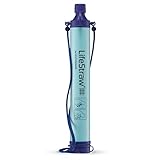
2. LifeStraw Personal Water Filter for Hiking, Travel and Emergency, Blue,
- Removes Bacteria & Parasites: The Microfiltration Membrane Removes 99.999999% of Waterborne Bacteria (Including E. Coli and...
- Removes Microplastics: Removes the Smallest Microplastics Found in the Environment (Down to 1 Micron), and Reduces Turbidity Down...
- Rigorous Testing: All Claims Are Verified with Laboratories Using Standard Testing Protocols Set by the US EPA, NSF, ASTM for...

Best for: Minimal carry, direct drinking.
A plastic, straw-style filter that weighs 45 g keeps the LifeStraw Personal Water Filter almost unnoticeable in a pocket or hip belt. The 12-inch length gives you direct drinking from shallow sources, which is useful when you want a simple grab-and-go purifier for fast backpacking stops.
Its microfiltration membrane removes 99.999999% of waterborne bacteria and 99.999% of waterborne parasites, so the value here is straightforward field safety rather than extra accessories. The filter also reduces microplastics down to 1 micron and lowers turbidity to 0.2 microns, which helps when the source water is cloudy or silty. At 3.75 x 1.39 x 12 inches, it packs long and slim rather than bulky, and the NSF external testing certification adds useful confidence for travel and emergency kits. This is a direct-use tool, so it works best when you want the lightest possible purification option and do not need a bottle or reservoir attached.
Pros
- 45 g weight keeps pack load extremely low
- 12-inch length supports direct drinking from water sources
- 99.999999% bacteria reduction addresses common trail pathogens
- NSF external testing certification supports confidence in performance
Cons
- It is a drinking straw format, so it does not store or carry treated water for later use.
Backpackers who want the simplest possible filter will appreciate how little space this takes. It is best when weight matters more than batch filtering and you only need to drink straight from the source.
| Specification | Details |
|---|---|
| Material | Plastic |
| Product Dimensions | 3.75″D x 1.39″W x 12″H |
| Item Weight | 45 g |
| External Testing Certification | NSF |
| Product Benefits | Reduce Parasites,Removes Bacteria |
I’d choose this for hikers who want the lightest possible safety layer and are comfortable drinking directly from streams or lakes. It fits well as a backup filter, a solo emergency piece, or a no-fuss travel item. The tradeoff is obvious: it is simple, not versatile.
3. Sawyer Products SP128 Mini Water Filtration System, Single, Blue

- Ideal for outdoor recreation, hiking, camping, scouting, domestic or international travel, and emergency preparedness
- High-performance 0.1 micron absolute inline filter fits in the palm of your hand and weighs just 2 ounces; 100% of MINI units...
- Attaches to included drinking pouch, standard 28 mm disposable water bottles, hydration packs, or use the straw to drink directly...
Best for: Compact solo squeeze kit.
A 0.1 micron absolute inline filter anchors the Sawyer SP128 Mini, giving solo backpackers a compact way to handle bacteria, protozoa, and microplastics on the trail. The included 16-ounce pouch and drinking straw make it easy to filter into a small container or drink directly when you want a tiny kit instead of a larger gravity setup.
The filter is rated for 100,000 gallons, which makes it a long-lived piece of gear for frequent trips and emergency storage. Its 4 x 3 x 8-inch dimensions keep it compact enough for a side pocket, while the 2-ounce weight helps it disappear in a fast-and-light pack. The package includes a cleaning plunger, which matters because backflushing keeps flow usable over time. It also attaches to standard 28 mm disposable water bottles and hydration packs, so you can adapt it to whatever containers you already carry. The included drinking pouch is only 16 ounces, which fits solo use and quick fills well.
Pros
- 2-ounce weight suits ultralight packing
- 0.1 micron filtration handles fine contaminants
- 28 mm bottle compatibility broadens use on trail
- Cleaning plunger supports routine maintenance
Cons
- The included drinking pouch is 16 ounces, so larger refills require multiple cycles.
This one makes sense for hikers who want Sawyer performance in a smaller format. It is strongest for solo use, short trips, and backup carry where size matters as much as clean water.
| Specification | Details |
|---|---|
| Brand | Sawyer |
| Product Dimensions | 4″L x 3″W x 8″H |
| Material | Blend |
| Capacity | 100000 gallons |
| Included Components | One MINI filter, one 16-ounce pouch, one drinking straw, one cleaning plunger |
| Package Information | Pouch |
| Installation Type | Countertop |
| Purification Method | Hollow Fiber Membrane |
| Power Source | Manual Operation |
I’d recommend this to backpackers who like a very small filter but still want bottle and hydration-pack compatibility. The pouch-and-straw setup keeps it flexible, and the included plunger is a practical detail for trail upkeep. It feels best suited to one person rather than a group.
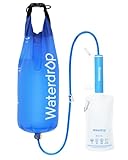
4. Waterdrop Gravity Water Filter Straw, Camping Water Filter, 0.1 Micron
- 5-Stage Efficient Filtration: With adoption of premium-quality 0.1 um ultrafiltration membrane and other raw materials, the Water...
- Professional Combination: Waterdrop Gravity Water Filter Straw with 1.5 gal Gravity-Fed Water Bag is an exclusive water...
- Longer Lifespan: The Waterdrop Filter straw can provide safe drinking water up to 1,400 gallons (5,300 liters), and ensures the...
Best for: Group camp gravity system.
A 1.5-gallon gravity-fed water bag gives the Waterdrop Gravity Water Filter Straw a clear advantage for camp filtering, because it can process more water for a group without hand pumping. The hollow fiber ultrafiltration membrane and included 16-ounce pouch make it a practical kit when you want gravity to do the work after a long hiking day.
The 0.1 um ultrafiltration membrane is paired with a five-stage filtration setup, so the system is aimed at improving both safety and taste by reducing chlorine, particulates, sediment, stones, sand, dirt, bad taste, and odor. Its 1,400-gallon capacity gives it a reasonable service life for recurring backpacking trips, and the 6.77 x 3.39 x 10.91-inch size keeps the kit manageable for a gravity setup. The package includes the straw, the 1.5-gallon bag, and a 16-ounce water pouch, so you can collect, filter, and serve water in camp without extra parts. Because it is non-electric, it fits remote trips where charging is not an option.
Pros
- 1.5-gallon gravity bag supports group camp use
- 0.1 um membrane helps reduce fine contaminants
- Five-stage filtration addresses taste and odor as well as debris
- Non-electric operation works far from power sources
Cons
- The gravity bag system takes more setup space than a small handheld straw or squeeze filter.
For hikers sharing water responsibilities, this setup saves effort at camp. It works best when you want to filter larger volumes once you stop moving rather than sip directly on the trail.
| Specification | Details |
|---|---|
| Brand | Waterdrop |
| Product Dimensions | 6.77″L x 3.39″W x 10.91″H |
| Material | Hollow Fiber Ultrafiltration Membrane |
| Capacity | 1400 gallons |
| Included Components | Water Filter Straw *1, 1.5 Gal Gravity-Fed Water Bag *1, 16 oz Water Pouch *1 |
| Package Information | Bag |
| Installation Type | Freestanding |
| Purification Method | Hollow Fiber Ultrafiltration Membrane |
| Power Source | Non Electric |
I’d lean toward this for backpacking pairs or small groups that want a gravity-fed camp routine. It brings more filtering capacity to basecamp-style use, and the included bag and pouch make the kit more complete than a bare straw. It is less about speed on the move and more about easy camp water management.
5. Sawyer Squeeze Water Filtration System, Cnoc Premium 2 Liter Bladder,

- Lightweight, easy to use portable water filter removes harmful bacteria, protozoa, cysts, sediment, And 100% of microplastics...
- The Sawyer Squeeze Filter is reusable and easy to clean, lasting up to 100,000 gallons. The fiber walls inside Sawyer's hollow...
- The Cnoc 2 liter (64 ounce) bladder is made from extra-durable TPU with a wide mouth opening for fast, easy filling.
Best for: Large-bladder squeeze system.
A 2-liter CNOC bladder gives the Sawyer Squeeze with Cnoc Premium bladder a bigger water-handling setup than smaller solo kits. The plastic construction and hollow fiber membrane filter let backpackers collect more water at once, which matters when you want fewer trips to the source and a more efficient camp routine.
The 2-liter capacity is the headline advantage, because it supports batch filling for dinner, bottles, and quick camp refills without constant back-and-forth. At 5.5 x 2 x 11.75 inches, the system still stays narrow enough for a pack side pocket, and the included cleaning coupling plus syringe make maintenance more practical on multiday trips. The filter is rated for 100,000 gallons, so the core element is intended for long service life. Its manual-operation design keeps it usable anywhere, and the freestanding setup means you can stage the bladder and filter without needing extra hardware. For backpackers who want more volume than a standard squeeze pouch, this is the point of the package.
Pros
- 2-liter bladder supports larger water batches
- Syringe and cleaning coupling help with maintenance
- 100,000-gallon filter rating supports long use
- Narrow 5.5-inch width helps packability
Cons
- The 11.75-inch height makes the packed system longer than smaller single-pouch filters.
This is a practical choice for hikers who want a bigger squeeze reservoir without moving to a full gravity setup. It suits camp cooking, group refills, and anyone who dislikes repeated small fills.
| Specification | Details |
|---|---|
| Brand | Sawyer |
| Product Dimensions | 5.5″L x 2″W x 11.75″H |
| Material | Plastic |
| Capacity | 2 liters |
| Included Components | 1 Squeeze water filter; 1 CNOC 2L Bladder; 1 cleaning coupling, 1 Syringe |
| Package Information | Bag |
| Installation Type | Freestanding |
| Purification Method | Hollow Fiber Membrane |
| Power Source | Manual Operation |
I’d pick this for backpackers who want a larger reservoir but still prefer a squeeze-style system. The 2-liter bladder is the key advantage, especially for cooking and multi-bottle topping off at camp. It feels like the right compromise between ultralight simplicity and group-friendly volume.
6. Katadyn Hiker Pro Transparent Hand Pump Water Filter

- PORTABLE EASY TO USE HAND PUMP WATER FILTER FOR CAMPING, BACKPACKING, HIKING, SURVIVAL AND EMERGENCY - Lightweight 11.2 oz...
- SEE YOUR FILTER IN ACTION - The transparent body gives you a clear view of the cartridge so you always know when to clean or...
- HIGH PERFORMANCE FILTRATION - 0.2-micron glass fiber cartridge filters up to 1,150 liters; activated carbon granules improve...
Best for: Pump filter for fast flow.
A manual pump design puts the Katadyn Hiker Pro in a different lane from squeeze and straw filters, and the 11.2-ounce weight keeps it light enough for backpacking. The transparent body lets you see the cartridge as you pump, which helps you monitor maintenance before flow slows down on the trail.
Its 0.2-micron glassfiber filter is paired with a pumping rate of 1 liter per minute, so the benefit is faster treated water when you need to fill bottles or hydration bladders. The 1,150-liter capacity is enough for repeated weekend trips and regular use, while the 3 x 3 x 6-inch body keeps the pump compact for a carried kit. Included hoses, a hydration-system connector, and a bottle adapter make it easy to connect to different carry systems. The cleanable filter protector and carry bag add everyday usefulness, especially when you want a more controlled water-processing method than a squeeze bottle. That transparent cartridge housing is a practical detail rather than a novelty.
Pros
- 1 liter per minute supports quick bottle filling
- 11.2-ounce weight keeps the pump portable
- Transparent body makes maintenance easy to monitor
- Hydration connector and bottle adapter add versatility
Cons
- It is a hand pump, so filtering requires active pumping instead of passive flow.
Backpackers who value speed and control will like this pump style. It is a strong fit when you want clean water quickly at camp and do not mind a little extra effort.
| Specification | Details |
|---|---|
| Brand | Katadyn |
| Product Dimensions | 3″L x 3″W x 6″H |
| Material | Synthetic |
| Capacity | 1150 liters |
| Included Components | Hiker Pro Transparent filter unit, Intake hose with modular pre-filter, Output hose with Easy Fill bottle adapter, Hydration system connector (1/4in), Cleanable filter protector, Carry bag, Instructions |
| Package Information | Cartridge |
| Installation Type | Freestanding |
| Purification Method | Pleated glassfiber |
| Power Source | Manual Winding |
I’d recommend this for campers who want a pump with fast output and a clear service indicator. The visible cartridge is especially useful on longer trips, because it reduces guesswork. It is a good choice if you prefer bottle filling over sipping directly from the source.
7. Practical Survival Reusable Emergency Water Filter Straws, 2-Pack

- CLEAN WATER ANYWHERE: Our water filter straws solve the real challenge of being on the move, finding water is rarely the problem...
- LIGHTWEIGHT & PORTABLE: Our filters weigh only 2 oz and measure 8 inches long, so you can take them with you anywhere. Be prepared...
- HIGH LEVEL FILTRATION: Each of the 2 filters removes over 99.99% of waterborne bacteria (such as E. coli and Legionella) and over...
Best for: Ultralight emergency pair.
Two reusable filter straws in one bag give the Practical Survival 2-pack a simple backup role for backpacking partners or one hiker carrying a spare. At 2 ounces and 8 inches long, each filter keeps gear weight low while still handling waterborne bacteria and parasites on the trail.
Each straw removes over 99.99% of waterborne bacteria and parasites, which is the core reason to carry it in a backpacking kit. The 1,100-gallon capacity per filter gives the pair a useful service life, and the included flushing plunger helps keep flow usable after repeated use. The 8 x 1.5 x 1.5-inch size is narrow enough for a side pocket or emergency pouch, and the hollow fiber membrane filtration method keeps the design focused on direct drinking. Because the package includes two filters, it works well as a shared safety backup for couples, scout leaders, or anyone who wants a spare in the pack. It is a straightforward tool rather than a feature-heavy system.
Pros
- Two-filter pack supports a backup or shared setup
- 2-ounce weight keeps each filter easy to carry
- Over 99.99% bacteria and parasite removal targets common risks
- Flushing plunger helps maintain flow on trail
Cons
- It is a straw-only system, so it does not collect or store treated water.
This pair makes sense when you want lightweight redundancy more than a full filtration station. It is especially useful for minimalist hikers who like having one filter in use and one spare packed away.
| Specification | Details |
|---|---|
| Brand | Practical Survival |
| Product Dimensions | 8″L x 1.5″W x 1.5″H |
| Material | Plastic |
| Capacity | 1100 gallons |
| Package Information | Bag |
| Installation Type | Freestanding |
| Purification Method | Hollow Fiber Membrane |
| Item Weight | 56.7 g |
I’d keep this in mind for backup planning rather than primary camp filtering. The two-pack format is useful for partners, and the included plunger helps with upkeep. It is best for hikers who value simplicity and redundancy over convenience features.
8. Practical Survival Reusable Emergency Water Filter Straws, 5-Pack

- CLEAN WATER ANYWHERE: Our water filter straws solve the real challenge of being on the move, finding water is rarely the problem...
- LIGHTWEIGHT & PORTABLE: Our filters weigh only 2 oz and measure 8 inches long, so you can take them with you anywhere. Be prepared...
- HIGH LEVEL FILTRATION: Each of the 5 filters removes over 99.99% of waterborne bacteria (such as E. coli and Legionella) and over...
Best for: Five-pack trail backup.
Five reusable filters in one package make the Practical Survival 5-pack a high-count option for backpacking groups, outfitter kits, or shared emergency storage. Each 8-inch straw stays light and compact, while the hollow fiber membrane format keeps the focus on direct, on-the-go drinking from clean sources.
The standout figure here is the 1,800-gallon capacity, which gives the pack a lot of collective use across multiple hikers or repeated trips. The 1 flushing plunger per filter is a useful maintenance detail, since keeping each straw flowing matters when several people depend on the set. Each unit measures 8 x 1.5 x 1.5 inches, so the size stays easy to distribute across pack pockets, and the bottle-style package information points to an organized way to store them. Because it uses gravity power, the setup suits low-effort filtering when you are camped or resting. This is a quantity-first pack for buyers who want extras, backups, and group coverage rather than a single premium unit.
Pros
- Five-filter count works well for groups or backups
- 1,800-gallon capacity supports extended use across the pack
- Each filter includes a flushing plunger
- 8-inch size keeps each unit easy to stash
Cons
- The straw format does not provide a built-in way to carry filtered water after use.
This pack is a practical fit for groups that want multiple lightweight filters instead of one shared unit. It is strongest as a bulk backup solution for backpacking, emergency kits, or outfitter storage.
| Specification | Details |
|---|---|
| Brand | Practical Survival |
| Product Dimensions | 8″L x 1.5″W x 1.5″H |
| Material | Plastic |
| Capacity | 1800 gallons |
| Included Components | 1 Flushing Plunger Per Filter |
| Package Information | Bottle |
| Installation Type | Freestanding |
| Purification Method | Hollow Fiber Membrane |
| Power Source | Gravity |
I’d treat this as a bulk-buy option for people who want several lightweight filters on hand. It is especially sensible for families, scout groups, or trip organizers who need backup pieces distributed across a team. The value is in the count and the shared simplicity.
9. Katadyn BeFree 1L Lightweight Collapsible Water Filter Bottle for Outdoors

- CLEAN WATER WHEREVER THE TRAIL TAKES YOU: A collapsible filtered water bottle with a 0.1 micron hollow fiber membrane that filters...
- Ultralight and Packable: Collapses flat to fit in running shorts, cycling jerseys, vests, and packs. A collapsible water bottle...
- No Pump, No Waiting: Fill from streams, lakes, or springs and drink immediately. Simple squeeze water filter design with no setup...
Best for: Pack-flat bottle filter.
A collapsible 1-liter bottle makes the Katadyn BeFree especially easy to stow in a backpack side pocket, running vest, or travel bag. The 0.1 micron hollow fiber membrane handles trail water in a bottle format, so you can fill, carry, and drink from one compact system.
Its 2 L/min flow rate is the key practical advantage, because it lets you drink quickly without waiting around at the source. The up-to-1,000-liter capacity gives the bottle useful longevity for frequent hikes, while the 4.25 x 10 x 3-inch dimensions still keep it slim enough to pack flat when empty. The collapsible construction is what makes it attractive for backpacking and travel, since it stores differently from rigid bottles. The package includes the filter membrane, and the gravity-fed design means there is no pump to manage. For hikers who want a bottle that can disappear in the pack and still move water fast, this format is very convenient.
Pros
- 1-liter bottle gives you carry-and-filter convenience
- 2 L/min flow rate delivers water quickly
- Collapsible design packs flat in small spaces
- 0.1 micron membrane filters sediment and fine particles
Cons
- The 1-liter capacity is smaller than larger reservoir systems for group camp use.
This works well for backpackers who want speed and compact storage in the same bottle. It is a smart pick when you prefer to drink directly from a collapsible container instead of carrying a separate filter system.
| Specification | Details |
|---|---|
| Brand | Katadyn |
| Product Dimensions | 4.25″L x 10″W x 3″H |
| Material | Synthetic |
| Capacity | 1 liters |
| Included Components | BeFree Filter Membrane |
| Package Information | Bottle |
| Installation Type | Freestanding |
| Purification Method | Hollow Fiber Membrane |
| Power Source | Gravity-fed |
I’d suggest this to hikers who value quick drinking and easy storage more than bulk filtration. The collapsible bottle format is what makes it shine on trail, especially for day hikes, weekend trips, or fast-moving backpacking. It is a clean fit for one-person use.
10. GRAYL GeoPress 24 oz Water Purifier & Water Filter Bottle,

- PURIFY WATER ANYWHERE: Make sketchy water safe to drink. Ideal for outdoor adventures (hiking, camping, backpacking, fishing...
- REMOVES ALL PATHOGENS: Virus (e.g. rotavirus, norovirus, hepatitis A), bacteria (e.g. E. Coli, salmonella, dysentery), and...
- FILTERS & CLEANS: particulates (e.g. sediment, microplastics) and adsorbs volatile organic compounds (VOCs), PFAS, chemicals...
Best for: Virus-removing purifier bottle.
A 24-fluid-ounce bottle with a purifier cartridge gives the GRAYL GeoPress a different role from simple filters, because it is set up to treat water that may contain viruses as well as bacteria and protozoa. The polypropylene #5 body and one-way drink mix valve support an all-in-one press-and-drink format for backpackers who want broader purification coverage.
The purifier cartridge uses electroadsorption and activated carbon, which adds a chemical-taste and contaminant treatment layer beyond basic mechanical filtration. Its ability to protect against viruses like Rotavirus, Norovirus, and Hepatitis A is a major distinction for international travel and uncertain water sources. At 3.4 x 3.4 x 10.4 inches and 15.9 ounces, it is compact enough for a bottle-based carry while still offering a full 24-ounce volume. The included cap, inner press, outer cup, and drink mix valve make the press cycle self-contained, which simplifies use when you want treated water quickly. For backpackers dealing with questionable sources, this is a stronger purification tool than standard trail filters.
Pros
- Virus protection expands use beyond basic trail filtration
- 24-ounce bottle format keeps water treatment self-contained
- Activated carbon helps with taste and VOC reduction
- Included press components simplify operation
Cons
- The 24-ounce capacity is smaller than larger reservoir systems for camp group use.
This is the pick for hikers who want purifier-level treatment rather than a basic backcountry filter. It makes the most sense for international travel, uncertain sources, and anyone who wants one bottle to do the whole job.
| Specification | Details |
|---|---|
| Brand | GRAYL |
| Product Dimensions | 3.4″L x 3.4″W x 10.4″H |
| Material | Polypropylene #5 |
| Capacity | 24 fluid ounces |
| Included Components | Cap, Inner Press, Outer Cup, Purifier Cartridge, One-Way Drink Mix Valve |
| Package Information | Bottle |
| Purification Method | Electroadsorption,Activated Carbon |
| Item Weight | 15.9 ounces |
| Model Name | GeoPress® Water Filter & Purifier Bottle |
I’d choose this for backpackers who care about purifier-level coverage, not just stream filtering. The bottle format keeps the process self-contained, and the virus protection is the major reason to step up to it. It fits best for travel-heavy users and trips where the source water is less predictable.
Quick Comparison Table of Top Water Filter Purifiers for Backpacking
| Product Name | Filtration Type | Weight | Capacity | Best For | Check Price |
|---|---|---|---|---|---|
| Sawyer Products SP129 Squeeze Water Filtration | 0.1 micron | 2 oz | 100000 gal | Solo backpacking | Check Price |
| LifeStraw Personal Water Filter for Hiking | Microfiltration | 45 g | Personal use | Ultralight travel | Check Price |
| Sawyer Products SP128 Mini Water Filtration | 0.1 micron | 2 oz | 100000 gal | Compact backup | Check Price |
| Waterdrop Gravity Water Filter Straw, Camping | 0.1 micron | Gravity-fed | 1400 gal | Group camping | Check Price |
| Sawyer Squeeze Water Filtration System, Cnoc | Hollow fiber | Lightweight | 2 liters | Two-person trips | Check Price |
| Katadyn Hiker Pro Transparent Hand Pump | Hand pump | 11.2 oz | 1150 liters | Fast water pumping | Check Price |
| Practical Survival Reusable Emergency Water Filter | Hollow fiber | 56.7 g | 1100 gal | Emergency use | Check Price |
| Practical Survival Reusable Emergency Water Filter | Hollow fiber | 56.7 g | 1800 gal | Bulk emergency kit | Check Price |
| Katadyn BeFree 1L Lightweight Collapsible Water | 0.1 micron | Lightweight | 1 liter | Packable trail use | Check Price |
| GRAYL GeoPress 24 oz Water Purifier | Purifier bottle | 24 oz | 24 oz | Virus protection | Check Price |
How to Choose the Right Best Water Filter Purifier for Backpacking
Filtration type and pathogen protection
Choose filtration first, because the best water filter purifier for backpacking matches the water you actually drink. Microfilters with 0.1 to 0.2 micron pores handle bacteria and protozoa well, while true purifiers add virus reduction through chemical, UV, or electrochemical treatment. For U.S.
backcountry streams and alpine lakes, a strong microfilter is enough when the source is clean and remote. For questionable taps, floodwater, or travel where viruses matter, pick a purifier or a filter-plus-treatment system.
Buy the option that matches your worst water source, not your easiest one.
| Type | Best for | Watch for |
|---|---|---|
| 0.1-0.2 micron microfilter | Clean streams and lakes | Bacteria and protozoa only |
| Purifier with chemical or UV support | Unknown water and taps | Virus protection included |
| Filter plus tablets | Backup security on longer trips | Separate treatment step |
Flow rate and ease of use
Pick the flow style that matches your pace, because the fastest system is the one you will actually use every day on trail. Squeeze filters and bottle systems suit solo hikers who want simple drinking and quick breaks; look for high flow through a wide hollow-fiber cartridge and a cap or bite valve that seals cleanly. Gravity systems suit pairs and groups because they fill several bottles without hand effort; a 1.5 to 2 liter bag is the practical sweet spot.
Pump filters fit silty water and awkward sources but need more work. Choose the style that cuts setup time, avoids repeated priming, and gives you comfortable one-handed drinking.
| Type | Best for | Trade-off |
|---|---|---|
| Squeeze | Solo hikers | Fast, compact, hand-powered |
| Gravity | Pairs and small groups | Slower setup, low effort |
| Pump | Muddy or shallow sources | More work, more control |
| Bottle/straw | Quick sipping on the move | Less capacity per fill |
Weight, packability, and capacity
Carry weight matters most when you hike far and refill often, so choose the lightest system that still covers your daily volume. For solo trips, a filter under 5 ounces with a compact 500 ml to 1 liter reservoir keeps the pack lean and simple. For two or more people, choose a larger reservoir or a gravity bag in the 1.5 to 3 liter range so you refill less often and spend less time at water stops.
Check bottle compatibility too: wide-mouth threading, bladder adapters, or inline connections remove friction. Pick the lightest setup that still stores enough water for your longest dry stretch.
| Capacity style | Best for | Signal of a strong pick |
|---|---|---|
| Sub-5 oz solo filter | Fast, minimalist trips | Small packed size and easy carry |
| 500 ml-1 L bottle system | Solo day-to-day use | Simple refill routine |
| 1.5-3 L gravity bag | Pairs and groups | Fewer refill stops |
Maintenance, durability, and field cleaning
Maintenance decides whether a filter stays useful after hard miles, so choose a model you can clean in the field without special tools. Hollow-fiber cartridges with an easy backflush port are the clearest win because they restore flow quickly and resist clogging better than fine, fragile media. Look for clear instructions, a cleaning syringe or adapter, and a storage cap that keeps the element wet or properly protected.
For rough use, pick thick hose fittings, reinforced seams, and a cartridge shell that survives drops and pack pressure. Choose a filter with simple cleaning and strong housing if you want reliable performance through repeated trips.
- Backflush port or cleaning syringe included
- Protected cartridge with end caps or storage tube
- Replaceable hoses, seals, or valves
- Clear lifespan rating in liters or gallons
- Rigid housing and reinforced seams for hard use
Water source flexibility and trip conditions
Match the filter to your water source and trip conditions, because the right setup changes with mud, cold, and group size. Fast-moving water and silty creeks need a system that can handle prefiltering, so choose a pump, a wider intake, or a sack with a sediment screen. For hydration bladders and wide-mouth bottles, prioritize universal adapters and threads that seal without leaks.
In freezing weather, keep the filter in your sleeping bag and avoid systems that trap water in exposed fibers. Solo hikers do best with a compact squeeze or bottle filter, pairs do well with a gravity bag, and larger groups need the highest-capacity purifier or gravity system with strong throughput.
Which Should You Choose?
- If you want the lightest option for solo hiking and don’t mind drinking directly from the source, choose a straw-style filter with a compact 0.1 micron membrane.
- If you need to treat larger amounts of water for a backpacking partner or camp setup, choose a squeeze filter with a 1–2 liter bladder or bottle attachment.
- If you often fill up from murky streams and want the fastest drink-ready water, choose a bottle purifier with a high flow rate and multi-stage purification.
- If you prefer pumping water into bottles and want easier use with less sucking or squeezing, choose a hand pump filter with a durable inline connection and broad bottle compatibility.
Quick Best Water Filter Purifier For Backpacking Buying Checklist
- Choose the right protection level. Make sure the system handles the contaminants most likely in your backpacking water source, including bacteria, protozoa, and, when needed, viruses.
- Match the flow style to your pace. Pick pump, squeeze, gravity, straw, or bottle-based designs based on how quickly you want to fill and drink on trail.
- Check total weight and packed size. A lighter, more compact purifier is easier to carry on longer routes and fits better in crowded packs.
- Look for simple cleaning. Trail-friendly filters should be easy to backflush, rinse, or maintain without special tools.
- Verify bottle and bladder compatibility. The best water filter purifier for backpacking should connect easily to the containers you already use.
- Consider durability in real conditions. A strong housing, reliable seals, and freeze resistance help the purifier last through repeated trips.
How Backpacking Water Filter Purifiers Remove Contaminants
Backpacking water filter purifiers usually rely on a combination of physical filtration and disinfection. Hollow-fiber or ceramic filters trap sediment, protozoa, and many bacteria by forcing water through tiny pores. Some purifier systems add chemical treatment, ultraviolet light, or specialized media to address viruses as well, which is important in regions where human contamination is more likely.
The key trade-off is flow rate versus protection: finer treatment often takes more time or effort. Understanding what each technology removes helps you match the device to the water sources you expect to encounter, from clear alpine streams to murkier, lower-elevation sources.
| Type | Best for | Typical strength |
|---|---|---|
| Hollow-fiber filter | Most backpacking trips | Fast, lightweight, good for bacteria and protozoa |
| Ceramic purifier | Repeated use in silty water | Durable and cleanable surface |
| Chemical purifier | Virus risk and emergency use | Broad microbial treatment with no moving parts |
Filter vs Purifier: What the Difference Means on Trail
People often use the words filter and purifier interchangeably, but the distinction matters. A filter is designed mainly to remove suspended particles and larger microorganisms such as protozoa and bacteria. A purifier goes further and is intended to reduce viruses too, which are smaller and can pass through many standard filters.
That extra protection can be important when traveling in areas with heavy human activity, agricultural runoff, or questionable sanitation upstream. In cleaner wilderness settings, a filter may be enough for many hikers, while a purifier adds a wider safety margin.
The right choice depends less on brand language and more on the water quality risks of your route.
| System | Protection focus | Common trade-off |
|---|---|---|
| Filter only | Bacteria and protozoa | Usually faster and simpler |
| Purifier | Bacteria, protozoa, and viruses | Often slower or more involved |
| Chemical treatment | Microbial inactivation | Requires wait time and correct dosing |
Cleaning and Storage Practices That Extend Service Life
Good maintenance has a big impact on performance, especially for hollow-fiber systems that can clog if mud and silt are left inside. After each trip, flush the unit according to the manufacturer’s instructions so trapped debris does not dry in place. Let all components air-dry completely before storage to reduce odor, mold, and internal damage from trapped moisture.
Keep hoses, syringes, and caps clean as well, since dirty accessories can reintroduce contamination. If your purifier includes chemicals, replace tablets or cartridges before they expire and store them away from heat and humidity.
A little routine care keeps flow rates steadier and helps the system stay reliable over many trips.
- Backflush after use if the model supports it
- Dry all parts before packing away
- Inspect seals, threads, and tubing for wear
- Store cartridges and chemicals in a cool, dry place
Common Trail Mistakes That Reduce Water Safety
Even the best backpacking water filter purifier can fail to protect you if it is used incorrectly. One common mistake is drawing water from the shallow edge of a stream, where sediment and runoff are most concentrated; collecting from moving water upstream of camp is usually safer. Another issue is cross-contamination: a clean bottle cap or drinking straw can become unsafe if it touches untreated water.
Users also sometimes forget that filters do not remove every hazard, especially dissolved chemicals or all viruses. In freezing conditions, a damaged filter may look fine but perform poorly, so any unit exposed to freezing temperatures should be checked carefully before reuse.
Correct technique matters as much as the device itself.
- Collect from the cleanest available source.
- Keep treated and untreated gear separate.
- Do not rely on a cracked or frozen filter.
- Follow contact time instructions for chemical treatment.
Using Purifiers With Bottles, Reservoirs, and Gravity Kits
Compatibility affects how convenient a purifier feels on trail. Some units screw directly onto standard bottle threads, making them quick for solo hikers who want to drink immediately. Others work better with hydration reservoirs or gravity bags, which are useful for groups because they can produce several liters at once without constant pumping.
Hose diameter, connector size, and inlet length can all matter, especially if you plan to refill from shallow pools or use a dirty-water bag. Before heading out, confirm that your containers match the system and that all seals close tightly.
A well-matched setup reduces spills, speeds refills, and makes routine hydration much easier during long days on the trail.
| Setup | Best for | Main advantage |
|---|---|---|
| Bottle-mounted | Solo hikers | Fast, compact, minimal setup |
| Gravity-fed | Pairs or groups | Hands-free batch treatment |
| Reservoir-compatible | High-mileage trips | Easy drinking while moving |
Frequently Asked Questions (FAQs)
What Should The Best Water Filter Purifier For Backpacking Remove?
The best water filter purifier for backpacking should remove bacteria, protozoa, and, when the route demands it, viruses. That protection matters most when you rely on untreated water from streams, lakes, or questionable taps, where contamination risk changes from one stop to the next.
Is A Purifier Better Than A Standard Filter For Backpacking?
Yes, a purifier is better than a standard filter for backpacking when you need broader microorganism protection. A filter usually targets bacteria and protozoa, while a purifier adds defense against viruses, which can be important in crowded areas or uncertain water sources.
Which Backpacking Purifier Style Is Easiest To Use?
A squeeze or gravity system is often easiest to use for backpacking because it needs less effort than pumping and can fill bottles hands-free. Squeeze models work well for solo hikers, while gravity setups are especially convenient for groups and camp use.
How Important Is Weight When Choosing A Backpacking Water Purifier?
Weight is extremely important when choosing a backpacking water purifier because every ounce adds up over long miles. Compact filters are easier to stash in a side pocket, while bulkier systems may be worth it only if you need faster output or higher capacity.
How Do I Know If A Backpacking Purifier Is Easy To Maintain?
A backpacking purifier is easy to maintain if it backflushes quickly, resists clogging, and does not require complicated disassembly. Look for designs with simple cleaning steps and clear lifespan guidance so you can keep flow strong in the field.
Can One Purifier Work For Different Water Sources On Backpacking Trips?
Yes, one purifier can work for different water sources on backpacking trips if it handles clear streams, silty water, and occasional stagnant sources well. The best designs pair reliable contaminant protection with good prefiltration or easy cleaning so performance stays consistent.
What Features Help A Backpacking Purifier Perform In Cold Weather?
Cold-weather performance depends on a backpacking purifier’s freeze resistance, storage habits, and cartridge design. Many systems are vulnerable if the filter media freezes, so it helps to keep the purifier close to your body and dry it properly after use.
Final Suggestions
Choosing the best water filter purifier for backpacking gives you safer drinking water, lighter carrying loads, and more confidence far from reliable taps. The right model balances protection, flow, and packability so it can keep up with solo hikes, group trips, and changing trail conditions. Pick the features that fit your route, and head out prepared for the next adventure.