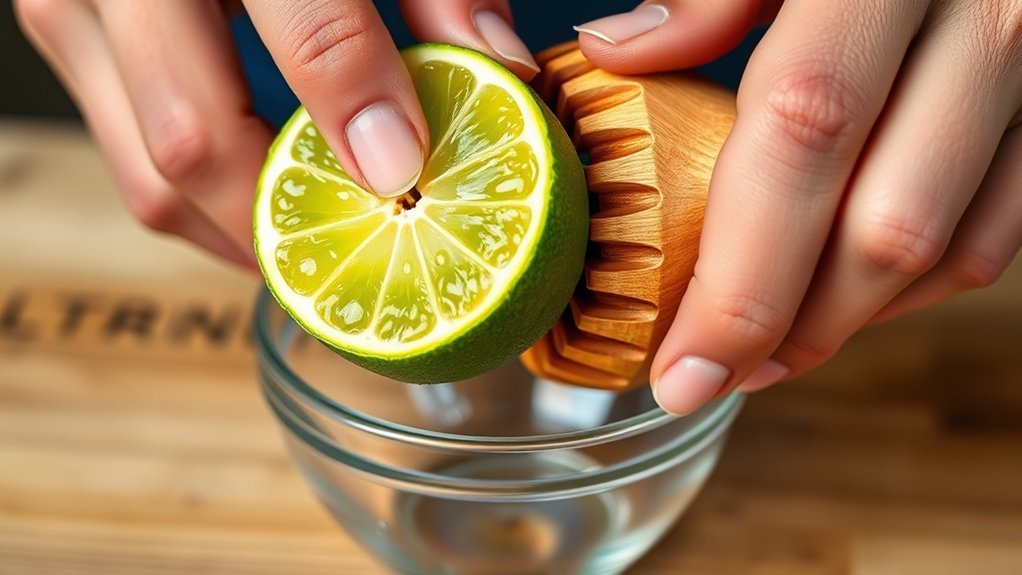
How to Juice Limes Without a Juicer
You might not realize that simply rolling and warming your limes before cutting can considerably increase the juice you get when you juice limes without a juicer. This simple step loosens the membranes inside, making extraction easier without special tools.
By using common utensils like a fork or spoon, you can efficiently juice limes while avoiding bitterness from the peel. Keep going to learn exactly how to prepare and extract every drop with minimal effort.
Key Takeaways
- Roll limes firmly on a countertop or warm them to soften membranes before cutting for easier juice extraction.
- Cut limes in halves or quarters, removing seeds to prevent bitterness and ensure cleaner juice.
- Use a fork or spoon to twist inside lime halves while squeezing to maximize juice without a juicer.
- Strain juice through cheesecloth or a fine mesh strainer to remove seeds and pulp for smooth juice.
- Store fresh juice in airtight glass containers, refrigerate up to 3 days, or freeze in ice cube trays for longer storage.
Juice Limes Without a Juicer: Quick and Easy Methods
Wondering how to get fresh lime juice without a juicer? You can extract juice efficiently using simple tools and heat methods. Start by thoroughly preparing limes. Roll them firmly on a countertop to loosen the juice inside.
Then, cut the lime in half. To maximize juice flow, apply heat methods like briefly microwaving the lime for about 10-15 seconds or soaking it in hot water for a few minutes before cutting. These techniques soften the membranes, making squeezing easier.
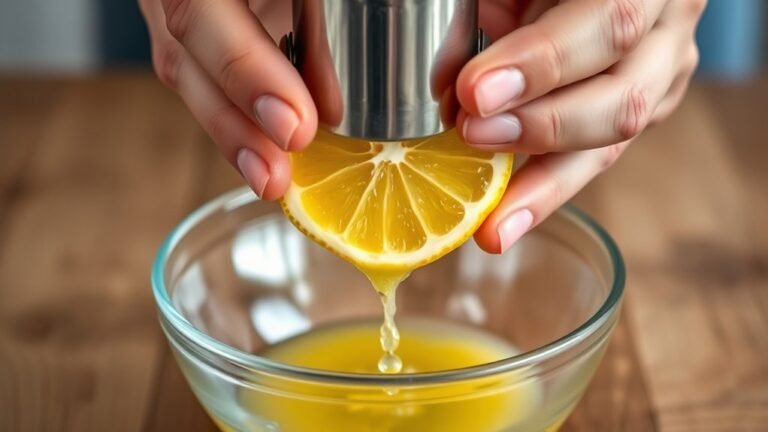
Next, use a fork or a spoon to press and twist inside each lime half, extracting the juice directly into a bowl or glass. These quick, easy methods help you get fresh lime juice without specialized equipment or extra effort.
Prepare Your Limes for Maximum Juice Yield
How can you guarantee every drop of juice is extracted from your limes? Start with proper preparation tips that focus on the fruit’s texture and condition. First, choose limes that feel heavy for their size. This indicates juiciness.
Before cutting, rinse them to remove any residues that might affect flavor. Use a sharp knife to slice the lime in half crosswise, exposing the segments for easier juice release. Avoid cutting too thin or unevenly, as this can make juicing harder.
Inspect the fruit texture; firm yet slightly pliable limes yield more juice. If the lime feels overly hard or dry, it may produce less juice. By applying these preparation tips, you’ll set yourself up for maximum juice yield, making the juicing process smoother and more efficient.
Roll and Heat Limes to Soften Them Up
You can get more juice by rolling your limes firmly on a countertop before squeezing. Applying gentle heat, like microwaving for 10-15 seconds or soaking in warm water, softens the fruit, making it easier to extract juice.
Heat breaks down the membranes inside, so your lime yields more liquid with less effort.
Benefits of Rolling Limes
Why does rolling limes before juicing make a difference? Rolling limes helps break down the membranes inside, making juice extraction easier and more efficient. When you apply pressure while rolling, you create citrus momentum that loosens the juice-filled vesicles.
This simple step softens the fruit, so when you press or squeeze, more juice flows out with less effort. Rolling limes also warms them slightly through friction, further aiding juice release.
By incorporating rolling limes into your prep routine, you maximize juice yield without needing a juicer. This technique saves time and reduces waste, ensuring you get every drop from your limes.
Best Methods to Heat
Rolling limes effectively loosens their internal membranes, but adding gentle heat can further soften the fruit and increase juice flow. When choosing your heating method, consider heat vs texture and portability vs convenience to find what suits you best.
| Method | Heat vs Texture | Portability vs Convenience |
|---|---|---|
| Microwave | Quick heat, slight texture change | Highly portable, very convenient |
| Warm Water Bath | Gentle, preserves texture | Portable, requires setup |
| Oven (Low Temp) | Even heat, may alter texture | Less portable, less convenient |
Each method balances softness and juice yield differently, so pick one matching your needs and available tools.
How Heat Softens Fruit
Applying heat to limes softens their internal membranes, making it easier to extract juice. When you roll and warm limes, the heat breaks down cell walls and loosens the pulp, enhancing juice flow.
This topic pairing of heat and rolling directly ties into citrus physics, the study of how physical forces affect fruit structure. By gently warming the lime, either in your hands or briefly in warm water, you reduce the viscosity of the juice and increase membrane permeability.
This physical change means less effort when you squeeze, yielding more juice without a juicer. Understanding how heat alters citrus texture empowers you to maximize juice extraction efficiently. So next time, roll your limes firmly, warm them slightly, and watch the juice flow more freely.
Extract Juice Using a Fork
Start by cutting your lime in half and removing any seeds. Hold one half firmly and insert a fork into the flesh.
Twist the fork while squeezing the lime to extract the juice efficiently.
Preparing The Lime
Grip the lime firmly and slice it in half crosswise to expose the juicy segments inside. Proper lime handling is key to maximizing juice yield with juicing alternatives like using a fork.
Before juicing, roll the lime on a countertop applying gentle pressure to loosen the juice. This simple prep step breaks down internal membranes, making extraction easier without a juicer.
| Step | Purpose |
|---|---|
| Roll lime | Loosen juice inside |
| Slice crosswise | Expose segments |
| Inspect for seeds | Avoid bitterness |
| Remove seeds | Cleaner juice |
| Hold firmly | Improve grip and control |
These steps ensure you prepare your lime effectively, setting the stage for efficient juice extraction using a fork.
Fork Juicing Technique
How exactly do you extract the most juice using just a fork? Start by cutting your lime in half. Hold one half firmly over a bowl with the cut side up.
Insert the fork into the flesh and twist while squeezing the lime with your other hand. The fork breaks up the pulp, releasing more juice than simple squeezing alone.
Keep twisting and pressing until the juice flow slows. This fork juicing technique is simple, efficient, and requires no special tools.
It’s a great discussion idea when sharing quick kitchen hacks. Remember, the sharper your fork’s tines, the easier it is to break the membranes inside the lime.
With practice, you’ll master this method and get the most juice without a juicer.
Juice Limes With a Spoon or Citrus Reamer
Although you might not have a juicer on hand, you can still extract plenty of juice from limes using a spoon or a citrus reamer. Start by rolling the lime on a hard surface to loosen the juice. Cut it in half, then press the reamer into the flesh, twisting firmly to release juice.
If you don’t have a reamer, a sturdy spoon works by scooping and pressing the lime’s segments while rotating it. A case study on manual juicing methods found this technique preserves essential oils, enhancing flavor pairing in cocktails and dishes.
Using these tools, you control the juice flow and minimize bitterness from the pith. It’s efficient, simple, and perfect when a juicer isn’t available, ensuring fresh lime juice for your recipes.
Strain Lime Juice With a Cloth or Cheesecloth
Want to guarantee your lime juice is smooth and free of pulp or seeds? Using a strain cloth or cheesecloth is an effective way to achieve that.
First, place a clean strain cloth or a few layers of cheesecloth over a bowl. Pour your freshly squeezed lime juice onto the cloth. Gather the edges of the cloth and twist them together tightly, then squeeze gently to extract the juice. The cloth will catch seeds and pulp, letting only clear juice through.
Cheesecloth methods are especially useful because they’re reusable and easy to clean. By straining your lime juice this way, you’ll avoid any gritty texture or unwanted bits, ensuring your juice is perfect for cocktails, cooking, or dressings.
Save Time: Tips for Juicing Multiple Limes
Once you’ve strained your lime juice to remove pulp and seeds, juicing multiple limes quickly becomes the next step to master. Efficient juicing helps you save time and reduces waste, positively impacting the environment.
Here are four tips to speed up the process:
- Roll limes firmly on the counter before cutting to release more juice.
- Use a fork or spoon to twist inside each lime half while squeezing.
- Juice limes over a large bowl to collect all juice at once, minimizing spills.
- Consider savory alternatives like adding lime zest to dishes to complement your juice, reducing the need for excessive juicing.
These methods streamline juicing and help lessen your environmental impact by maximizing every lime.
Store Fresh Lime Juice Properly
How long can you keep fresh lime juice before it loses its flavor and freshness? Typically, fresh lime juice stays good for up to 3 days refrigerated. To maximize store efficiency, use airtight containers like glass jars or BPA-free plastic bottles to prevent oxidation and flavor loss.
Avoid storing juice in metal containers, which can alter taste. If you don’t have a juicer, equipment alternatives like a fine mesh strainer or cheesecloth help you extract clearer juice, reducing pulp that can spoil faster. Label your containers with the date to track freshness easily.
For longer storage, consider freezing lime juice in ice cube trays, then transfer cubes to sealed bags. This method saves space and preserves the juice’s vibrant flavor for months.
Avoid These Common Mistakes When Juicing Limes
Don’t skip preparing your limes by rolling them to loosen the juice inside. Avoid squeezing too hard, which can release bitter oils from the peel.
Paying attention to these details guarantees you get the best flavor without extra effort.
Overlooking Lime Preparation
Why skip preparing your limes before juicing? Overlooking preparation often leads to wasted juice and unnecessary frustration. Proper lime handling sets you up for efficient extraction and better flavor.
To avoid common pitfalls, follow these steps:
- Roll the lime firmly on the counter to soften it and release juices.
- Warm the lime in your hands for a minute to loosen internal membranes.
- Trim the ends to expose more pulp, making juicing easier.
- Cut the lime into appropriate sections, usually halves or quarters, depending on your method.
Skipping these preparation steps means you’ll struggle more and get less juice. Taking a moment to prep transforms juicing from a chore into a quick, rewarding process.
Applying Excessive Pressure
When you squeeze a lime too hard, you risk extracting bitter oils from the peel along with the juice. Applying hot pressure or excessive force doesn’t necessarily increase juice yield; instead, it can ruin the flavor balance.
You want to apply firm but controlled pressure to maximize juice without bitterness. Here’s a quick comparison:
| Pressure Level | Juice Yield | Flavor Quality |
|---|---|---|
| Light | Low | Fresh and tangy |
| Moderate | Optimum | Balanced and bright |
| Excessive | Slightly higher | Bitter due to peel oils |
Avoid hot pressure that crushes the peel, as it releases unwanted compounds. Instead, roll the lime gently under your palm before juicing and squeeze steadily to boost juice yield without sacrificing taste.
Why Juicing Limes Without a Juicer Works Well
How can you efficiently extract juice from limes without a specialized tool? Juicing limes manually works well because it allows you to control pressure and avoid unwanted flavors. When you juice by hand, you can avoid pressing too hard, which prevents rind bitterness from seeping into your juice. Plus, you capture the crisp zest aroma without needing extra equipment.
Here’s why manual juicing works effectively:
- You apply just enough pressure to release juice without crushing the rind.
- It’s easier to avoid extracting bitter oils from the lime’s skin.
- You preserve the lime’s natural crisp zest, enhancing flavor.
- It’s quick, requires no cleanup, and uses tools you already have.
This method maximizes fresh lime flavor while minimizing bitterness.
Frequently Asked Questions
Can I Use Bottled Lime Juice Instead of Fresh Lime Juice?
You can use bottled lime juice instead of fresh, but bottled vs fresh differs in flavor and acidity. Bottled juice lacks fresh zest and seeds impact taste, so fresh lime often gives better brightness and complexity.
How Long Does Fresh Lime Juice Last in the Refrigerator?
Like a fading sunset, fresh lime juice lasts about 3 to 4 days in your fridge. To preserve juiciness, store lime pulp in an airtight container or sealed bag. Keep it cold and away from light.
What Are the Health Benefits of Drinking Fresh Lime Juice?
You’ll enjoy health benefits from lime juice thanks to its nutrition facts, rich vitamin C and antioxidants. Citrus synergy boosts immunity, aids digestion, and promotes skin health, making fresh lime juice a powerful, natural wellness drink you shouldn’t skip.
Can Lime Juice Be Frozen for Later Use?
Yes, you can freeze lime juice for later use just like you freeze lemons. Pour the juice into ice cube trays, then store the cubes in a sealed bag.
Is It Safe to Juice Limes With Seeds Inside?
Like Pandora’s box, lime seeds hold bitterness you don’t want unleashed. It’s safe to juice with seeds, but they may add bitterness, affecting freshness durability.
For pure taste, strain seeds or choose bottled juice instead.
Conclusion
Now that you know how to juice limes without a juicer, you can easily get up to 30% more juice by rolling and warming them beforehand. Using a fork or spoon helps you extract every drop while keeping bitterness at bay.
These simple steps save time and effort, especially when juicing multiple limes. Remember to strain and store your juice properly to maintain freshness.
With these tips, you’ll never miss a juicer again when you need to juice limes without a juicer.