How to Juice With a Juicer
When you decide to juice with a juicer, choosing the right fruits and vegetables is essential for both taste and nutrition. Selecting fresh, high-quality produce will enhance the flavor and health benefits of your juice. You’ll need to prepare your produce carefully, ensuring it fits your machine’s specifications to avoid jams and maximize yield.
Understanding the correct assembly and operation of your juicer can make the process smoother. Proper setup helps you get the best results and reduces the chance of breakdowns. But knowing how to handle common issues and maintain your equipment will ultimately determine the quality and longevity of your fresh juices.
Key Takeaways
- Select fresh, ripe produce and consider complementary flavor and nutrient pairings for balanced, nutritious juice.
- Wash produce thoroughly, remove inedible parts, and chop into pieces that fit the juicer’s feed chute.
- Assemble the juicer properly, plug it in, and feed produce steadily using a pusher tool to avoid jams.
- Collect juice in the container while pulp separates, and adjust produce size or feeding speed if jams occur.
- Clean and disassemble the juicer immediately after use; rinse parts thoroughly and refrigerate juice in airtight containers.
Choose the Best Fruits and Vegetables for Juicing Flavor and Nutrition
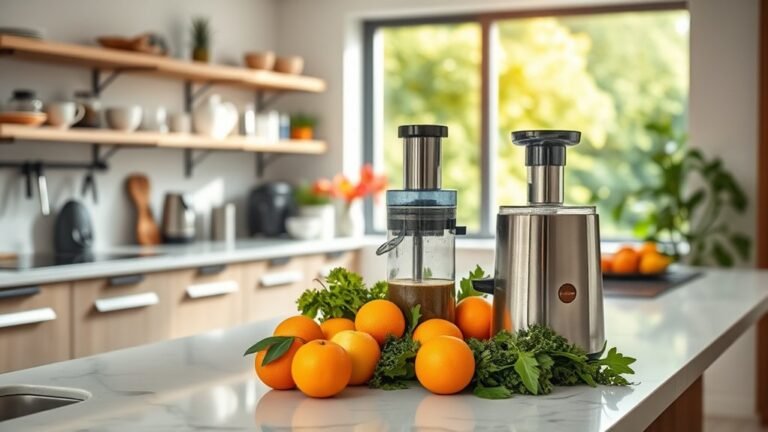
How do you pick the best fruits and vegetables to maximize both flavor and nutrition in your juice? Start by selecting fresh, ripe produce, as their nutrient density and taste peak at this stage. Consider flavor pairings that complement each other, like apple with carrot or spinach with cucumber, to create balanced, enjoyable juices.
Nutrient synergy plays a key role; for example, pairing vitamin C-rich citrus fruits with iron-rich leafy greens enhances iron absorption, boosting your juice’s health benefits. Choose a variety of colors to cover a broad spectrum of phytonutrients and antioxidants.
Avoid overloading your juice with overly sweet fruits to maintain a balanced flavor profile. By strategically combining fruits and vegetables with complementary flavors and nutritional benefits, you’ll craft juices that are both delicious and highly nourishing.
Prepare Produce for Juicing
Selecting the right fruits and vegetables is only the first step; preparing them properly guarantees you get the most from your juicer. Prepping produce efficiently ensures maximum juice yield and enhances flavor. Follow these essential steps:
- Wash all produce thoroughly to remove dirt, pesticides, and bacteria, which can affect juice quality.
- Use a sharp knife and practice knife safety by cutting on a stable surface, removing inedible parts like skins, seeds, and stems that might damage your juicer or alter taste.
- Chop larger items into smaller pieces that fit your juicer’s feed chute, preventing jams and ensuring smooth operation.
How to Use Your Juicer: Step-by-Step Guide
Once you’ve prepped your produce, you’ll want to assemble your juicer correctly and plug it in to ensure it’s ready for use. Start by securing the juicer’s components firmly, following the manufacturer’s instructions to avoid leaks or malfunctions.
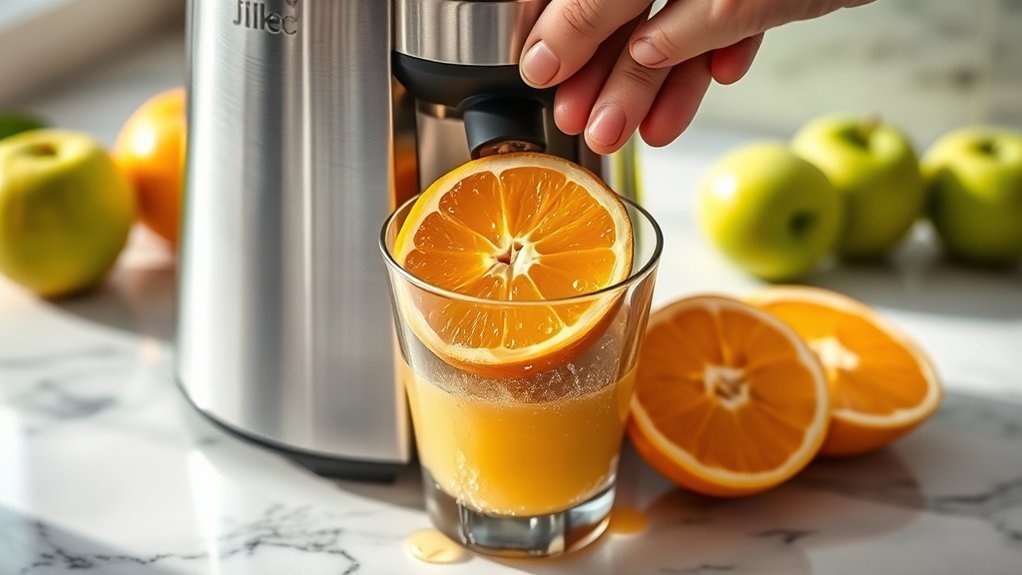
Next, feed your produce steadily into the chute; don’t overload it to prevent jams. Use a pusher tool to guide items safely without forcing. As the juicer operates, collect juice in the designated container while pulp gathers separately.
Remember, two word ideas like “slow speed” and “quick clean” summarize essential juicer functions efficiently. Avoid unrelated ideas such as blending or cooking, which don’t apply here.
When done, switch off and unplug the juicer before disassembling for cleaning. This step-by-step approach maximizes juice yield and ensures safe, effective juicer use.
Troubleshoot Common Juicer Problems Like Jams and Low Juice Yield
After you’ve mastered the correct assembly and operation of your juicer, you might still encounter issues like jams or low juice yield. To address these problems effectively, follow these tips for troubleshooting jams and improving juice yield:
- Check produce size: Cut fruits and vegetables into smaller pieces to prevent clogging and ensure smooth operation.
- Feed produce steadily: Avoid overloading the chute; feed ingredients slowly to reduce strain and prevent jams.
- Use appropriate produce: Hard, fibrous items like celery or carrots increase juice yield but may cause jams if not prepared correctly.
Clean and Maintain Your Juicer Properly
How often should you clean your juicer to keep it performing at its best? Experts recommend cleaning your juicer immediately after each use to avoid residue buildup, which can impair function and harbor bacteria. Adhering to a consistent cleaning frequency ensures longevity and optimal juice quality.
Begin by disassembling the juicer and rinsing parts under warm water. Use a soft brush to remove pulp from filters and blades. For effective sanitization methods, soak removable parts in a solution of one tablespoon of bleach per gallon of water for five minutes, then rinse thoroughly.
Avoid harsh detergents that can damage components. Regular maintenance, including checking for worn seals or blades, will help you troubleshoot issues early and keep your juicer running smoothly.
Store and Enjoy Fresh Juices Safely
Where should you store your fresh juices to maintain their nutritional value and flavor? Proper juice storage is essential for store safety and to preserve freshness. Follow these guidelines:
- Refrigerate Immediately: Fresh juices should be stored in airtight glass containers and refrigerated within 30 minutes to slow oxidation and bacterial growth.
- Consume Quickly: For optimal nutrition, drink your juice within 24 to 48 hours. Vitamin C and enzymes degrade rapidly after juicing.
- Avoid Heat and Light: Keep juices away from direct sunlight and heat sources, which accelerate nutrient loss and spoilage.
Frequently Asked Questions
Can Juicing Replace Whole Fruits and Vegetables in My Diet?
You can’t fully replace whole fruits and vegetables with juice because juice purity often comes with fiber loss, which reduces satiety and nutrient absorption. Whole produce provides essential fiber that juicing removes, so balance both for optimal health.
Are There Specific Health Benefits of Juicing Versus Blending?
You’ll find juicing offers faster nutrient absorption but reduces fiber, affecting digestion.
Blending preserves fiber, supporting fullness and gut health. Consider these health tradeoffs to choose what fits your dietary goals best.
How Do Juicing and Smoothie Recipes Differ Nutritionally?
Juicing versus blending differs nutritionally because juicing removes fiber but concentrates vitamins and minerals, while blending retains fiber, promoting fullness and slower nutrient absorption.
You’ll get better nutrient retention with smoothies overall.
Can I Juice Frozen Fruits and Vegetables Effectively?
Frozen fruit and frozen vegetables are like hidden treasures; you can juice them effectively, but expect less juice yield and a thicker texture.
Thaw them slightly for better extraction and flavor, ensuring your juice stays nutrient-rich and fresh.
What Types of Juicers Are Best for Beginners?
You’ll find beginner friendly juicers like centrifugal models easy to use and budget friendly. They’re fast, require minimal prep, and clean up quickly, making them perfect if you’re just starting juicing without a big investment.
Conclusion
Juicing can boost your nutrient intake—studies show fresh juice retains up to 90% of vitamins and minerals. By choosing the best produce, prepping properly, and using your juicer correctly, you’ll maximize flavor and nutrition.
Remember to troubleshoot jams, clean your juicer right after use, and store juice in airtight glass containers to keep it fresh for 24–48 hours.
With these steps, you’ll enjoy delicious, healthful juices every time. Mastering how to juice with a juicer ensures you get the most out of your fruits and vegetables for a healthier lifestyle.