How to Make Mayonnaise in a Blender
You’ll need fresh egg yolks, a pinch of salt, and the right oil to make mayonnaise in a blender. You’ll also need a clean, dry blender and steady hands.
Making mayonnaise in a blender requires precise timing and gradual emulsification to achieve the perfect texture. If you rush or miss a step, the mixture can break or remain thin.
Understanding these key points will guarantee your homemade mayonnaise turns out smooth, creamy, and balanced—here’s how to master the process.
Key Takeaways
- Use fresh, room-temperature egg yolks, neutral oil, vinegar or lemon juice, mustard, and salt for a smooth emulsified mayonnaise.
- Start blending egg yolks and salt on low speed, then slowly drizzle oil while gradually increasing blender speed.
- Add lemon juice or vinegar halfway to balance flavor and help emulsification without causing separation.
- If mayonnaise separates, re-emulsify by blending with a fresh egg yolk or a teaspoon of warm water.
- Store homemade mayo in an airtight glass container, refrigerate immediately, and use within one week.
Ingredients Needed for Blender Mayonnaise
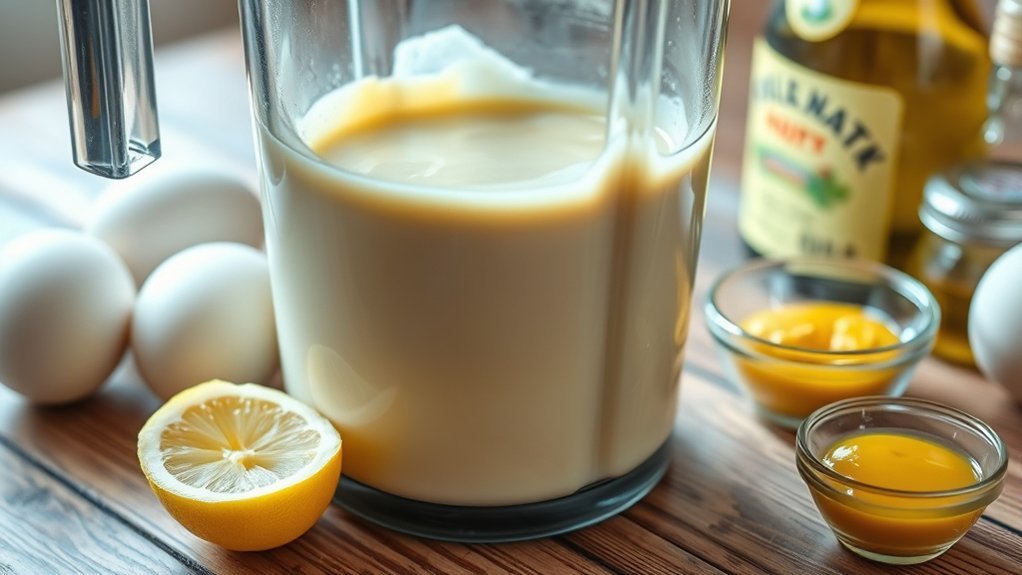
What ingredients do you need to make mayonnaise in a blender? You’ll require fresh egg yolks, neutral oil (like canola or vegetable), vinegar or lemon juice, mustard, and salt. These components combine perfectly to create a smooth, creamy emulsion.
Before you start, ensure your kitchen lighting is bright so you can measure ingredients accurately and spot any inconsistencies. Proper lighting also helps maintain blender safety by allowing you to monitor the process closely, preventing overfilling or spills.
Use fresh, room-temperature ingredients for optimal emulsification. Avoid adding oil too quickly to maintain a stable texture. By understanding these essentials, you prepare yourself to make mayonnaise efficiently and safely, minimizing risks and maximizing results with your blender.
How to Prepare Your Blender for Making Mayonnaise
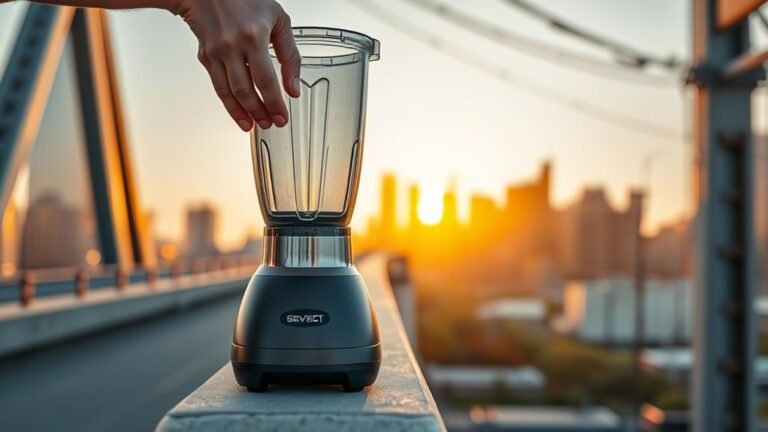
Before you begin blending, ensure your blender is clean and completely dry to prevent any water from disrupting the emulsion. Residual moisture can dilute the flavor compounds and cause the mixture to separate.
Also, check that all parts are securely assembled to avoid excess blender noise during operation, which can indicate improper fitting or imbalance.
Place the blender jar on a stable surface. Confirm the blades are sharp and free of debris to achieve smooth emulsification. Pre-measuring your ingredients nearby will streamline the process.
| Step | Action | Purpose |
|---|---|---|
| 1 | Clean & dry blender | Prevent emulsion disruption |
| 2 | Assemble securely | Minimize blender noise |
| 3 | Inspect blades | Ensure smooth emulsification |
How to Blend Homemade Mayonnaise Step-by-Step
With your blender clean, dry, and assembled correctly, you’re ready to start the emulsification process. Begin by adding the egg yolks and a pinch of salt into the blender jar. Secure the lid firmly to maintain your kitchen aesthetics and prevent spills.
Next, slowly drizzle in the oil while the blender runs on low speed, allowing the equipment to create a stable emulsion. Gradually increase the speed as the mixture thickens, ensuring a smooth, creamy texture.
Add lemon juice or vinegar halfway to balance flavor and aid emulsification. Pause occasionally to scrape down the sides with a spatula, maintaining an even blend.
This step-by-step method guarantees consistent results, achieving perfect homemade mayonnaise efficiently while preserving the sleek vibe of your kitchen setup.
How to Tell When Mayonnaise Is Perfectly Emulsified
You’ll know your mayonnaise is perfectly emulsified when it has a smooth, thick texture that holds its shape without being runny. Check for an even, pale color throughout with no streaks or separation.
If you spot any oil pooling or watery layers, the emulsion hasn’t fully formed yet.
Texture Consistency Check
A perfectly emulsified mayonnaise has a smooth, creamy texture that clings slightly to the sides of your blender jar without separating or appearing oily. To perform an effective texture check, dip a clean spoon into the mixture and observe its consistency. It should hold its shape without running or breaking apart.
Use the table below to identify texture states during your check:
| Texture State | Description | Action Needed |
|---|---|---|
| Too Thin | Runs off spoon quickly | Continue blending |
| Perfectly Thick | Clings, smooth, no separation | Ready to use |
| Grainy/Separated | Looks curdled or oily | Restart emulsification |
This ensures your mayonnaise reaches ideal mouthfeel without compromising stability, crucial for culinary success before moving on to color observation.
Color Uniformity Observation
After confirming the mayonnaise has the right texture, examine its color to further assess emulsification quality. Perfectly emulsified mayonnaise displays consistent color uniformity throughout, usually a pale, creamy yellow. This uniform shade indicates that oil droplets are evenly suspended within the egg yolk and vinegar mixture.
Uneven patches or streaks suggest the emulsification timing was off or the blending speed inconsistent. Pay close attention to subtle color shifts; early emulsification stages often show slight translucency or separation before becoming fully opaque.
Achieving ideal color uniformity confirms the blend has reached optimal emulsification timing, ensuring a stable, smooth product. By scrutinizing these visual cues, you’ll know precisely when your mayonnaise is perfectly emulsified, avoiding over- or under-processing.
Separation Signs Detection
How can you confidently identify when your mayonnaise has reached perfect emulsification without risking separation? Look for a thick, creamy texture that holds its shape and a uniform, pale yellow color without streaks.
If you notice any liquid pooling on the surface or oil droplets separating, these are clear separation signs indicating emulsification failure. Avoid continuing to blend once you spot these, as over-processing can worsen separation.
Additionally, the mixture should cling smoothly to a spoon without breaking apart or appearing curdled. A well-emulsified mayonnaise exhibits a glossy finish and consistent viscosity throughout.
How to Fix Common Blender Mayonnaise Problems
If your mayonnaise breaks or separates, don’t worry. You can fix it by carefully re-emulsifying with a fresh egg yolk or warm water.
Adjust the consistency by slowly adding oil or lemon juice while blending to reach the right thickness. To prevent separation, maintain a steady blending speed and ensure all ingredients are at room temperature before starting.
Fixing Broken Mayonnaise
Why does mayonnaise sometimes break or separate when you blend it? The main causes are bad technique and inconsistent emulsification. When oil is added too quickly or the blender speed fluctuates, the emulsion destabilizes, leading to separation.
To fix broken mayonnaise, start by placing a fresh egg yolk in a clean bowl. Slowly whisk the broken mixture into the yolk, adding a few drops at a time. This gradual incorporation helps re-establish the emulsion.
Alternatively, you can add a teaspoon of warm water or mustard to stabilize the mixture before blending again. Remember, consistent blending speed and controlled oil addition are essential to maintain a stable emulsion.
Fixing broken mayonnaise requires patience and precise technique to restore its creamy texture effectively.
Adjusting Mayonnaise Consistency
When your mayonnaise turns out too thick or too thin, adjusting its consistency is key to achieving that perfect creamy texture. Understanding emulsification science helps you know when to add liquids or thickeners for balance. Always prioritize blender safety by avoiding overfilling, which can cause spills or inconsistent blending.
To fix your mayonnaise consistency, try these steps:
- Add a teaspoon of warm water or lemon juice gradually to thin thick mayonnaise.
- Incorporate a small amount of oil slowly to thicken overly thin mayo.
- Blend at a moderate speed to maintain stable emulsification.
- Use room temperature ingredients for better emulsification science results.
- Stop blending once desired consistency is reached to avoid separation.
These precise adjustments will help you master your blender mayonnaise every time.
Preventing Mayonnaise Separation
How do you keep your homemade mayonnaise from separating during or after blending? The key lies in controlled oil incorporation and maintaining a stable creaming texture. Start by adding oil very slowly in a thin, steady stream while the blender runs; this gradual process ensures the emulsion forms properly.
If you add oil too quickly, the mixture can break, causing separation. Use room-temperature ingredients to stabilize the emulsion, as temperature fluctuations disrupt the creaming texture. If separation occurs, stop blending and add a teaspoon of warm water or an extra egg yolk, then blend again to re-emulsify.
Avoid over-blending, which can also destabilize the mixture. With careful technique, you’ll achieve smooth, stable mayonnaise with consistent creaming texture every time.
Flavor Tips and Variations for Blender Mayonnaise
A well-crafted blender mayonnaise serves as a versatile base that you can easily customize to suit your taste preferences or elevate specific dishes. When experimenting, always prioritize blender safety by securing the lid firmly and avoiding overfilling to prevent spills, which also simplifies kitchen cleanup.
Consider these flavor variations to diversify your mayonnaise:
- Add fresh herbs like dill or basil for a fragrant twist.
- Incorporate garlic or roasted red peppers for depth and smokiness.
- Mix in a touch of mustard or wasabi for sharpness.
- Use citrus zest or juice to brighten the flavor.
- Stir in a pinch of smoked paprika or cayenne for subtle heat.
These simple adjustments transform your blender mayonnaise into a tailored condiment perfect for any meal.
How to Store Homemade Mayonnaise Properly
To keep your homemade mayonnaise fresh, store it in an airtight glass container to prevent contamination and preserve flavor. Refrigerate immediately and use within one week to assure safety and quality.
Avoid metal containers, as they can react with the acidic ingredients and alter the taste.
Ideal Storage Containers
Selecting the right container plays an essential role in preserving the freshness and safety of your homemade mayonnaise. The ideal storage container should have a secure, airtight seal to prevent contamination and oxidation. Consider container design that facilitates easy scooping without introducing air.
Glass jars with tight-fitting lids are often the best choice, as they don’t retain odors or stains. Plastic containers should be food-grade and BPA-free.
Key features of ideal storage containers include:
- Airtight seals to maintain freshness
- Non-reactive materials like glass or high-quality plastic
- Wide mouths for convenient access
- Opaque or tinted designs to minimize light exposure
- Durable construction for repeated use and cleaning
Choosing the right container ensures your mayonnaise stays safe and delicious longer.
Shelf Life Tips
How long can you safely keep homemade mayonnaise before it spoils? Typically, you can store it in the refrigerator for up to one week. To maintain freshness and ensure food safety, always use an airtight container and keep the mayonnaise chilled below 40°F (4°C).
Avoid cross-contamination by using a clean spoon each time you scoop it out. Given the absence of preservatives, homemade mayo is more perishable than store-bought versions, making prompt consumption essential.
This topic relevance is crucial for proper handling, preventing waste, and protecting your health. For optimal audience engagement, remember to label your container with the preparation date.
Stick to these shelf life tips to enjoy your creamy creation safely and confidently while maximizing its flavor and texture.
Why Homemade Blender Mayonnaise Is Healthier Than Store-Bought
Why choose homemade blender mayonnaise over store-bought options? When you make it yourself, you control every ingredient, avoiding hidden additives and preservatives common in commercial brands. This control debunks nutrition myths about mayonnaise being inherently unhealthy.
Making your own blender mayonnaise lets you avoid hidden additives and rethink common nutrition myths.
Plus, homemade versions use fresher oils and eggs, enhancing nutrient quality. Equipment ergonomics also play a role. Your blender ensures smooth emulsification, improving texture and consistency without artificial stabilizers.
Here’s why homemade blender mayonnaise is healthier:
- No artificial preservatives or additives
- Fresh, high-quality oils rich in healthy fats
- Control over salt and sugar content
- Avoids questionable ingredients like hydrogenated oils
- Uses fresh eggs, boosting protein and vitamin content
Making mayonnaise at home empowers you to enjoy a cleaner, more nutritious condiment.
How to Use Blender Mayonnaise in Recipes
Blender mayonnaise enhances a wide range of dishes by adding a creamy, rich texture and balanced flavor. You can elevate sandwiches, salads, and dips by incorporating it as a base or finishing touch. When experimenting, consider flavor pairing carefully. Blend in herbs, garlic, or spices to complement your main ingredients.
For instance, add lemon zest for seafood dishes or smoked paprika for grilled meats. Always prioritize kitchen safety by storing your homemade mayonnaise in airtight containers and refrigerating it promptly to prevent bacterial growth. Use it within a week to ensure freshness.
Avoid cross-contamination by using clean utensils each time. By mastering these practices, you’ll confidently integrate your blender mayonnaise into diverse recipes, enhancing both taste and texture while maintaining food safety.
Bonus: Quick Tips for Perfect Blender Mayonnaise Every Time
When achieving the perfect mayonnaise, timing and ingredient temperature play essential roles. In this two word discussion, “blender expectations,” you need to understand your blender’s power and speed for optimal emulsification. Use room temperature eggs and oil to prevent separation.
Here are quick tips to ensure consistent results:
- Add ingredients in a steady stream, not all at once.
- Start with the blender on low speed, then increase gradually.
- Use a neutral oil like canola for a balanced flavor.
- Avoid over-blending; stop as soon as the mixture thickens.
- If it breaks, whisk in a teaspoon of warm water to re-emulsify.
Following these precise steps will help you produce smooth, stable mayonnaise every time you use your blender.
Frequently Asked Questions
Can I Use Olive Oil Instead of Vegetable Oil in Blender Mayonnaise?
You can use olive oil as an olive oil substitution, but choose mild types for better emulsion. Ensure your blender’s efficiency aids blending; consider egg safety and shelf life. For vegan mayo, use aquafaba instead.
Is It Safe to Use Raw Eggs in Homemade Mayonnaise?
Using raw eggs in mayonnaise is like walking a tightrope. It’s safe if you practice safe egg handling. Always choose pasteurized eggs to ensure raw egg safety and prevent risks from harmful bacteria like Salmonella.
How Long Does Homemade Mayonnaise Last in the Refrigerator?
You should store homemade mayonnaise in the refrigerator and use it within 3 to 4 days. Proper mayonnaise storage is essential for egg safety, preventing bacterial growth and ensuring it stays fresh and safe to consume.
Can I Make Vegan Mayonnaise in a Blender?
Yes, you can make vegan mayonnaise in a blender by using vegan substitutions like aquafaba or silken tofu instead of eggs. Add flavor additions such as lemon juice, mustard, and nutritional yeast for a rich, creamy texture and taste.
What Type of Blender Works Best for Making Mayonnaise?
You want a blender with at least 500 watts and sharp, multi-pronged blade design. It’s the heartbeat that guarantees smooth, stable emulsions.
Higher wattage and precise blades give you control, preventing separation and achieving perfect mayonnaise every time.
Conclusion
Now that you’ve mastered making mayonnaise in your blender, you’ll see how effortlessly it comes together—smooth and creamy, like silk flowing from a ribbon. With fresh ingredients and careful emulsifying, you control the flavor and quality every time.
Keep your tools clean, add oil slowly, and refrigerate promptly to guarantee safety and freshness. Homemade blender mayonnaise isn’t just tastier; it’s a healthier, customizable staple that elevates any dish with confidence and ease.
By following these tips, your homemade blender mayonnaise will always turn out perfect, making it a delicious and reliable addition to your kitchen.