How to Use a Hand Juicer
You might think using a hand juicer is messy or tiring, but with the right technique, it’s actually pretty simple and efficient.
A hand juicer allows you to extract fresh juice quickly and with minimal effort.
Once you know how to apply steady pressure and position your fruit correctly, you’ll get more juice with less fuss and pulp.
Plus, you’ll avoid common mistakes that waste juice or strain your wrist.
Stick around, and you’ll learn how to make the most of your hand juicer every time.
Key Takeaways
- Cut fruit into halves or quarters, removing seeds or pits to fit the juicer and prevent mechanism interference.
- Position the fruit half on the juicer’s cone, ensuring balance before applying firm, steady pressure.
- Twist the fruit back and forth while pressing slowly to extract maximum juice with controlled pulp.
- Grip handles firmly and use proper hand positioning to maximize leverage and reduce wrist strain.
- Rinse juicer parts immediately after use to avoid sticky residue and maintain hygiene.
Choose the Best Hand Juicer for Your Fruit
When you’re picking a hand juicer, think about the type of fruit you’ll be squeezing most. Different juicers handle citrus, berries, or harder fruits in unique ways, so choosing one designed for your favorite fruit ensures optimal yield.
For instance, a reamer-style juicer works great for lemons and limes, extracting juice efficiently, while a press-style juicer suits oranges better. You’ll want to focus on models made from durable materials like stainless steel or heavy-duty plastic. They stand up to regular use without cracking or bending.
A sturdy juicer not only lasts longer but also gives you better leverage to juice effortlessly. Picking the right one means less frustration and more fresh juice from every squeeze.
Prepare Fruit for Hand Juicing
Before you start juicing, make sure you pick ripe fruits bursting with flavor for the best juice. Give them a good wash to get rid of any dirt or pesticides, then cut them into manageable pieces that fit your hand juicer.
These simple steps will make your juicing smoother and tastier.
Selecting Ripe Fruits
How can you tell if a fruit is ready to give up its sweet, juicy goodness? It all starts with ripe fruit selection. Look for fruits that feel heavy for their size and have a slight give when gently pressed, signs they’re bursting with flavor.
Color matters too; vibrant hues usually signal ripeness. Keep seasonal varieties in mind, as fruits picked in season taste better and juice more easily.
For example, summer peaches should smell fragrant and yield slightly to touch, while winter oranges should feel firm but heavy. Avoid fruits with bruises or dull skin; they’re past their prime.
Selecting the right fruit ensures your hand juicer works efficiently and your juice tastes fresh and delicious every time.
Washing and Cleaning
Picking the perfect fruit gets you halfway to delicious juice, but giving it a good wash is what really sets the stage. Start by rinsing your fruit under cold running water to wash away dirt and pesticide residues.
For stubborn spots, gently scrub with a soft brush or cloth. Avoid soaking fruits like berries, as they can absorb water and lose flavor.
Use washing tips like mixing a splash of vinegar in water for a natural cleanse, which also helps with stain prevention on your hands and surfaces.
After washing, dry your fruit with a clean towel to prevent slipping while juicing. This simple step not only keeps your juice pure but also protects your hands and your hand juicer from sticky stains and buildup.
Cutting Into Portions
Wondering how to get your fruit ready for juicing without making a mess? Start by slicing your citrus into manageable portions, usually halves or quarters, depending on the size of your hand juicer.
Cutting into smaller pieces not only makes juicing easier but also helps you control the amount of crunchy pulp that ends up in your glass. When you slice, try to avoid cutting too close to the rind; you want to keep that vibrant citrus zest intact, as it adds a flavorful aroma to your juice.
Plus, leaving a bit of zest on the fruit helps release essential oils during juicing, giving your drink an extra zing. So grab a sharp knife, cut confidently, and get ready for a juicy, refreshing experience!
Use a Hand Juicer Step by Step
Now that your fruit is ready, it’s time to get juicing with your hand juicer.
You’ll learn how to position the fruit just right and press down efficiently to squeeze out every drop of juice.
Let’s break down the simple steps to make your juicing quick and mess-free.
Preparing Fruits Properly
How exactly do you get your fruits ready for the juicer to make the freshest, most flavorful juice? First off, always pick ripe fruits. They’re sweeter, juicier, and will boost your juice yield substantially.
Give your fruits a good rinse to remove dirt or residues. For citrus like oranges or lemons, roll them on the counter to soften and release more juice. Cut fruits into halves or quarters, depending on their size; this makes juicing easier and faster.
Remove any seeds or pits, as they can mess with your hand juicer’s mechanism and taste. If the skin is tough or bitter, peel it off to keep your juice smooth and enjoyable. Proper prep ensures you get every drop of deliciousness without extra effort.
Extracting Juice Efficiently
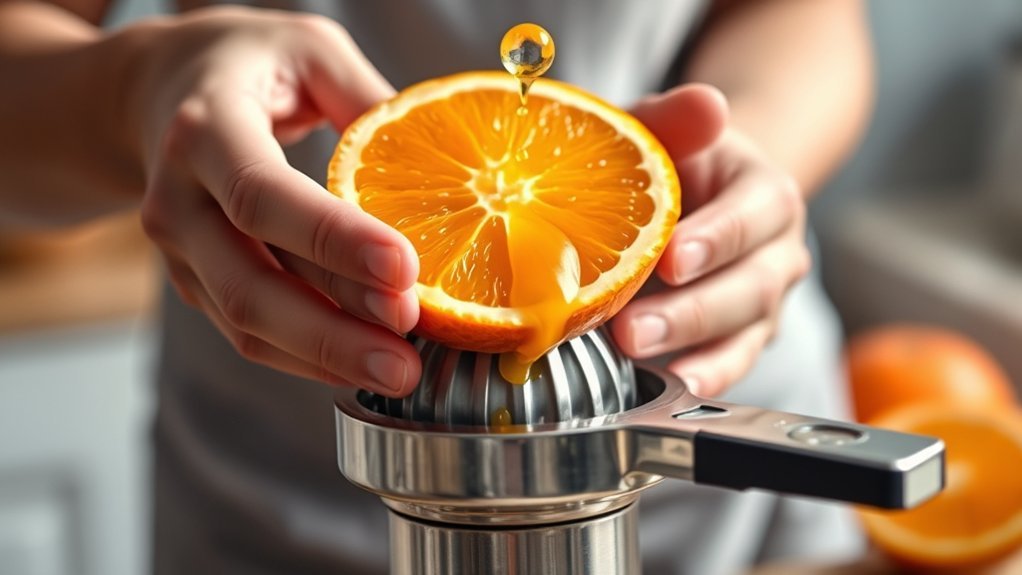
Ready to get the most juice out of your fruits without breaking a sweat? Start by positioning half a fruit on the juicer’s cone, ensuring juicing balance.
Apply firm, steady pressure and twist back and forth. This citrus adaptation lets you extract maximum juice with minimal effort.
Keep your grip steady and adjust pressure to avoid pulp overflow or juice loss. Remember, slow and controlled beats fast and frantic every time!
| Step | Action |
|---|---|
| 1 | Place fruit half on cone |
| 2 | Ensure juicing balance |
| 3 | Apply firm, steady pressure |
| 4 | Twist gently back and forth |
| 5 | Adjust pressure as needed |
Follow these steps, and you’ll squeeze every last drop effortlessly!
Avoid Common Hand Juicer Mistakes
Why do some hand juicing attempts leave you with less juice and more frustration? It’s usually because of common errors you can easily avoid. First, don’t squeeze too lightly. Apply firm, steady pressure to get the most juice out.
Also, avoid mistakes like not cutting your fruit into the right size. Too large, and it’s tough to press; too small, and it’s messy. Another common error is juicing fruits with thick skins without peeling them first, which can leave bitter flavors behind.
Finally, don’t ignore the seeds. They can clog your juicer or make the juice bitter. By spotting and avoiding these mistakes, you’ll save time, reduce mess, and enjoy every drop of fresh juice you make.
Clean and Maintain Your Hand Juicer
Although using your hand juicer is simple, keeping it clean and well-maintained takes a bit of effort. You’ll thank yourself every time with fresher juice and a longer-lasting tool. After each use, rinse parts immediately to avoid sticky residue.
Keep a cleaning log to track when you deep clean or lubricate moving parts. Here are some maintenance tips for smooth juicing:
| Task | Frequency | Tip |
|---|---|---|
| Rinse parts | After every use | Use warm water |
| Deep clean | Weekly | Soak in lemon water |
| Lubricate | Monthly | Use food-safe oil on joints |
Stick to these simple steps, and your hand juicer will reward you with delicious juice for years!
Best Fruits to Juice With a Hand Juicer
Wondering which fruits work best with your hand juicer? You’ll want to stick with the best fruits that are juicy and easy to squeeze, like oranges, lemons, limes, and grapefruits. These citrus fruits naturally release plenty of juice with minimal effort, making them perfect for hand juicing.
Apples and pears also work well, especially if you cut them into smaller pieces before juicing. For a tropical twist, try juicing pineapples or pomegranates, but be prepared to put in a bit more elbow grease. Avoid really hard or fibrous fruits like bananas or avocados; they don’t produce juice and can clog your juicer.
Mixing these juicy pairings lets you create delicious blends that are refreshing, flavorful, and packed with nutrients—all from your trusty hand juicer!
Store Freshly Squeezed Juice Properly
How long can you keep that fresh juice tasting just as vibrant as the moment you squeezed it? To store freshness, you need to act fast. Pour your juice into an airtight container right away and pop it in the fridge.
Glass jars with tight lids work best. They prevent oxidation, which dulls flavor and nutrients. Avoid plastic containers that can absorb odors or let air in.
Keep your juice cold and sealed, and you’ll enjoy the bright, tangy taste for up to 48 hours. Remember, the longer you wait, the more it loses that fresh zing.
Get More Juice With Your Hand Juicer
Getting every last drop from your hand juicer can make all the difference between a good glass of juice and a great one. First, make sure you’re using proper juicer ergonomics. Grip the handles firmly and position your hands to maximize leverage without straining your wrists. This not only makes squeezing easier but also helps you extract more juice effortlessly.
Next, don’t toss that pulp! Embrace pulp utilization by adding it to smoothies, baking, or even soups for extra fiber and flavor. If you want to boost juice yield, try pressing the fruit twice. First for juice, then again to squeeze out residual liquid.
With these simple tweaks, your hand juicer will work smarter, leaving you with richer juice and less waste every time.
Try Creative Recipes With Your Hand Juicer
Once you’ve mastered squeezing every drop and making good use of the pulp, it’s time to get adventurous with your hand juicer. Dive into creative recipes that mix unexpected flavor combinations, like fresh ginger with citrus or beetroot paired with apple.
Your hand juicer isn’t just for plain juice; it’s a tool to craft vibrant, refreshing blends that excite your taste buds. Experiment by combining herbs like mint or basil with fruit juices for an herbal twist.
Don’t forget to try savory options, such as juicing tomatoes with a hint of lime and chili for a zesty drink. These creative recipes let you personalize every sip, turning simple fruit and veggies into sensational, healthy drinks that keep you coming back for more.
Frequently Asked Questions
Can I Use a Hand Juicer for Vegetables?
You can use a hand juicer for veggies, but keep in mind vegetable compatibility. It works best with softer ones. Watch out for seed management, as some seeds might clog your juicer or add bitterness to your juice.
Are Hand Juicers Dishwasher Safe?
While some hand juicers boast dishwasher safety, others demand gentle handwashing to protect their durability. You’ll want to check your model’s specifics. Don’t risk warping parts or dulling finishes just for convenience’s sake!
How Long Does Freshly Squeezed Juice Last Refrigerated?
You’ll enjoy the best freshness timing if you drink your juice within 24 to 48 hours refrigerated. Keep it in an airtight container, and store it cold to preserve flavor and nutrients. Don’t wait too long!
Can I Juice Citrus Fruits With Seeds Intact?
Don’t worry, you can juice citrus fruits with seeds intact; your hand juicer usually catches them. Still, seed removal helps avoid bitterness, and you’ll love having control over pulp, making your juice just how you like it!
Is a Hand Juicer Better Than an Electric Juicer?
You’ll love hand juicer advantages like simplicity, easy cleanup, and quiet use. Electric juicer drawbacks include noise, size, and tricky parts.
If you want quick, hassle-free juicing, a hand juicer’s your best bet!
Conclusion
So, you’ve mastered the art of wielding your hand juicer like a pro, only to realize it’s not a magic wand turning fruit into endless juice—shocking, right?
But hey, with a little patience, steady pressure, and care, you’ll squeeze out every last drop without turning your kitchen into a pulp disaster zone.
Just remember, the juicer’s not doing all the work—you are. Cheers to your freshly squeezed success with your hand juicer!