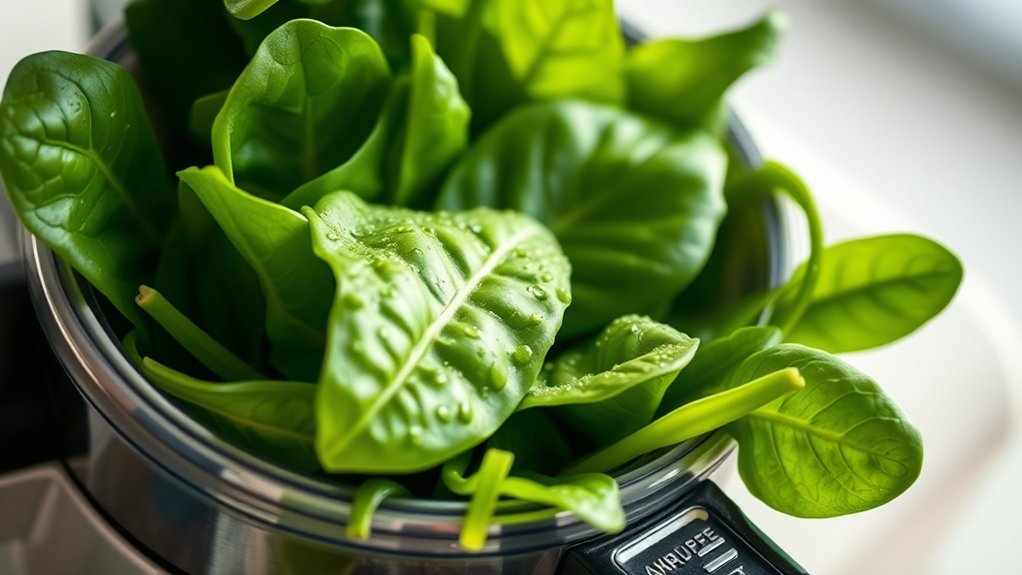
Can You Put Spinach in a Juicer
Juicing spinach is like opening a treasure chest of nutrients right from your kitchen. Can you put spinach in a juicer? Absolutely! Those delicate leaves can actually survive the juicing process and deliver their full health benefits.
The truth is, spinach juice can be a powerful addition to your diet when prepared correctly. There are specific considerations to keep in mind to get the most out of your leafy greens. Proper preparation ensures you maximize the nutrients and enjoy a fresh, vibrant drink.
Key Takeaways
- Yes, fresh spinach can be juiced effectively to provide concentrated vitamins and antioxidants.
- Spinach yields less juice than fruits, so combining it with high-water ingredients improves juice volume.
- Use a masticating juicer for better nutrient preservation and to handle delicate spinach leaves well.
- Thoroughly wash and dry spinach before juicing to remove dirt, pesticides, and reduce dilution.
- Consume spinach juice promptly to preserve nutrients and avoid excessive oxalate intake for kidney health.
Can You Juice Spinach?
Can you juice spinach effectively? Yes, you can, but success depends on how fresh your spinach is. Proper spinach storage is crucial; keep it in a breathable container or perforated plastic bag in the refrigerator to maintain crispness and nutrient content.
When shopping, use spinach grocery tips like choosing vibrant, dark green leaves free from yellowing or wilting. Fresh spinach yields more juice and better flavor.
Juicing spinach provides a concentrated source of vitamins A, C, and K, along with antioxidants and minerals. However, because spinach is leafy, it produces less juice than fruits or root vegetables, so combining it with high-water-content ingredients can improve yield.
How to Prepare Spinach for Juicing
You should start by washing your spinach thoroughly to remove dirt and potential pesticides.
Next, remove the tough stems to improve the juice’s texture and prevent bitterness. These steps guarantee a cleaner, smoother juice with better flavor.
Washing Spinach Thoroughly
How thoroughly you wash spinach before juicing directly impacts both the flavor and safety of your juice. Washing spinach removes dirt, pesticides, and potential bacteria, which is essential since spinach often grows close to the ground.
To wash spinach properly, fill a large bowl with cold water, submerge the leaves, and gently agitate them to loosen debris. Repeat this process until the water runs clear.
After washing spinach, dry it using a salad spinner or clean towel to prevent excess water from diluting your juice. Proper washing also extends spinach storage life by reducing spoilage caused by residual soil and microbes.
Removing Tough Stems
Why remove tough stems from spinach before juicing? Removing tough, spinach stems improves the juice’s texture and prevents your juicer from clogging. These fibrous stems are less juicy and can add an unpleasant bitterness, affecting the overall flavor.
To prepare spinach for juicing, hold a bunch of leaves and pinch off the stems close to the base. You can also strip leaves individually for better control. Research shows that juicing primarily the leaves maximizes nutrient extraction, as stems contain less chlorophyll and antioxidants.
Additionally, removing tough stems reduces wear on your juicer’s blades, prolonging its lifespan. While some stem inclusion is possible, prioritize removing thick, fibrous parts to ensure a smooth, palatable juice and a more efficient juicing process.
Which Juicers Work Best for Spinach
Choosing the right juicer substantially impacts the efficiency and quality of spinach juice extraction. Spinach’s delicate leaves require a juicer that minimizes oxidation and preserves nutrients while delivering a smooth pulp texture. Masticating juicers, for example, excel here due to their slow, cold-press method.
When selecting a model, consider these factors:
- Best nozzle design: Look for a juicer with a nozzle that efficiently separates juice from fibrous pulp without clogging.
- Pulp texture control: Juicers that allow you to adjust pulp dryness enhance juice clarity and nutrient retention.
- Ease of cleaning: Spinach leaves can leave residue, so models with removable parts make maintenance simpler.
Troubleshooting Common Spinach Juicing Problems
Spinach juicing can present challenges such as clogging, low juice yield, and bitter taste, but you can address these issues effectively with the right techniques. Ensuring spinach compatibility with your juicer and optimizing juicer efficiency are key. For instance, using a slow masticating juicer reduces clogging and improves juice extraction.
| Problem | Cause | Solution |
|---|---|---|
| Clogging | Fibrous spinach parts | Chop spinach finely |
| Low juice yield | Overloading juicer | Feed spinach gradually |
| Bitter taste | Over-juicing leaves | Use fresh, young spinach leaves |
| Foam formation | High speed juicer | Switch to low-speed juicer |
| Pulp wetness | Inefficient juicer screen | Clean or replace screen |
Addressing these factors improves your juicing experience significantly.
How to Combine Spinach With Other Ingredients
How can you enhance the flavor and nutritional profile of your juice by combining spinach with other ingredients? Pairing spinach with complementary leafy greens and fruits not only boosts taste but also supports spinach preservation by balancing its delicate texture and nutrient content. Consider these effective combinations:
Enhance your spinach juice by pairing it with complementary greens and fruits for balanced flavor and nutrition.
Kale or Swiss chard: Rich in antioxidants, they complement spinach’s mild flavor and enhance leafy greens pairing.
Citrus fruits like oranges or lemons: Their vitamin C content aids iron absorption from spinach, maximizing nutritional benefits.
Cucumber or celery: High water content helps maintain juice consistency and supports hydration.
Spinach Juice Flavor Tips
You’ll want to balance spinach’s natural bitterness by pairing it with sweeter fruits like apples or pineapple, which also boost overall flavor.
Adding a touch of citrus can brighten the juice and reduce any grassy notes. Experimenting with these combinations helps create a more enjoyable and revitalizing spinach juice.
Balancing Spinach Bitterness
Why does spinach juice sometimes taste bitter, and how can you reduce that bitterness? Spinach contains oxalates and certain phenolic compounds contributing to its bitter notes. Balancing bitterness requires smart flavor pairing to create a smoother taste profile.
You can try these evidence-based tactics:
- Add citrus fruits: Lemon or orange juice neutralizes bitterness through acidity.
- Include mild-flavored vegetables: Cucumber or celery dilutes intensity without overpowering.
- Incorporate herbs: Fresh mint or basil introduces pleasant aromatic compounds that mask bitterness.
These approaches use chemical interactions and sensory contrasts to improve your juice’s flavor. By thoughtfully combining ingredients, you’ll enhance drinkability while retaining spinach’s nutritional benefits.
Experiment with these flavor pairing strategies to find your ideal balance, turning potentially bitter spinach juice into a refreshing, enjoyable beverage.
Enhancing Juice Sweetness
While balancing bitterness helps make spinach juice more palatable, boosting its natural sweetness can further improve flavor and encourage regular consumption. You can enhance spinach sweetness by combining it with naturally sweet fruits and vegetables, which also provide juicing alternatives to diversify flavors. For example, apples and carrots add sweetness without overpowering spinach’s nutrients.
| Ingredient | Effect on Spinach Juice |
|---|---|
| Apple | Adds sweetness, mild flavor |
| Carrot | Enhances sweetness, earthy tone |
| Pineapple | Boosts sweetness, tropical note |
These juicing alternatives help mask spinach’s slight bitterness while increasing overall sweetness. Experimenting with different combinations lets you find the perfect balance, encouraging you to enjoy spinach juice regularly.
Health Benefits of Spinach Juice
Unleashing the nutrients in spinach through juicing delivers a potent boost of vitamins and minerals in an easily absorbable form. When you juice spinach, you tap into several key spinach benefits that support your overall health.
Juicing spinach unlocks vital nutrients, offering a powerful, easily absorbed health boost.
Spinach juice is rich in antioxidants, which help reduce inflammation and combat oxidative stress. It also provides a concentrated source of vitamin K, essential for bone health and proper blood clotting. Plus, the juice contains nitrates that may improve cardiovascular function by enhancing blood flow.
To maximize juice safety and benefits:
- Use fresh, thoroughly washed spinach to avoid contaminants
- Consume juice promptly to preserve nutrient integrity
- Limit intake to avoid excessive oxalates, which can affect kidney health
Juicing spinach is a smart way to boost your nutrition efficiently.
Frequently Asked Questions
Can Spinach Juice Be Stored for Later Use?
Yes, you can store spinach juice for later use in airtight storage containers to preserve freshness. Keep it refrigerated to maintain the spinach flavor, but consume within 24-48 hours for the best taste and nutrient retention.
Is It Safe to Juice Spinach Every Day?
You can safely juice spinach daily, but moderation matters. Think of spinach safety like a delicate balance. Too much oxalate might affect kidneys.
Rotate greens to guarantee you get nutrients without overdoing daily juicing spinach intake.
Does Juicing Spinach Remove All the Fiber?
Juicing spinach removes most fiber since the juicer separates liquid from pulp, altering spinach texture. You won’t get all fiber, so remember to keep your juicer clean to avoid residue buildup and maintain efficiency.
Can Spinach Juice Help With Weight Loss?
Spinach juice can support weight loss by providing nutrients without many calories, but beware weight loss myths promising quick fixes. Its high spinach saturation helps you feel full, aiding healthy, sustainable habits rather than magic results.
How Much Spinach Is Needed for One Glass of Juice?
You’ll need about 2 to 3 cups of fresh spinach for one glass of juice, considering spinach yield varies. Its high water content makes juicer feasibility excellent, ensuring you get a nutrient-rich, vibrant green drink every time.
Conclusion
You absolutely can juice spinach, and doing so is like releasing a nutrient-packed superhero in your glass! With vitamins A, C, K, and powerful antioxidants, spinach juice turbocharges your health.
Just prep it right, use a masticating juicer, and pair with juicy ingredients for a delicious, nutrient-dense boost. Drinking it fresh means you’re practically drinking pure energy.
So don’t hesitate, spin up that spinach juice and power your day like a pro! Yes, you can definitely put spinach in a juicer for a vibrant, healthy drink.