How to Juice Without a Juicer
If you don’t have a juicer, you can still make fresh juice using tools you likely already own. Juicing without a juicer is simple and effective by blending chopped fruits and vegetables and then straining the mixture. This technique allows you to extract flavorful juice without specialized equipment.
This method works best with high-water-content produce. Some simple techniques can help you get the most liquid and nutrients out of your ingredients. But how exactly do you choose the right produce and handle the blending and straining steps?
Key Takeaways
- Chop produce into small pieces, blend thoroughly, then strain juice using a fine mesh strainer or cheesecloth.
- Freeze fruits beforehand to improve juice yield and enhance texture without needing a juicer.
- Use a blender with a powerful motor and sharp blades for smooth blending and easier juice extraction.
- Press blended pulp gently with a spoon or spatula over a strainer to maximize juice without bitterness.
- Combine high-water-content fruits and veggies like cucumber, celery, and soft fruits for efficient juice extraction.
How To Juice Without a Juicer: Quick Start Guide
A quick start to juicing without a juicer involves selecting the right fruits and vegetables, preparing them properly, and using common kitchen tools efficiently. Don’t fall for juicing myths that say you need expensive equipment. Tools like a blender, fine mesh strainer, or cheesecloth can extract juice effectively.
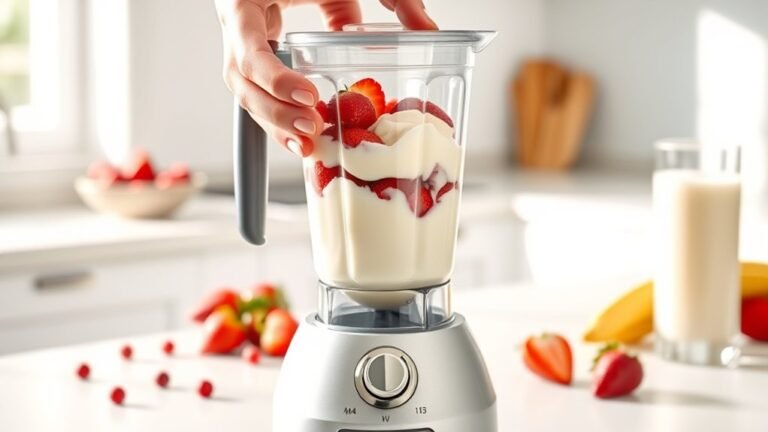
Start by chopping produce into small pieces to ease blending. Blend thoroughly, then strain the pulp using a fine mesh strainer or cheesecloth, squeezing out maximum liquid—a simple kitchen hack. Another tip: freeze fruits beforehand to improve juice yield and texture.
These methods preserve nutrients and flavor without specialized devices. By applying these practical kitchen hacks, you can enjoy fresh juice easily, debunking myths and making juicing accessible even without a juicer.
Choosing Fruits and Veggies for Juicing
Which fruits and vegetables work best for juicing without a juicer? When selecting produce, crucial considerations include water content, texture, and flavor balance.
High-water-content items like cucumbers, celery, and watermelon yield more liquid, making extraction easier. Soft fruits such as oranges, grapes, and berries also release juice efficiently by hand or with minimal processing.
Conversely, fibrous vegetables like kale and carrots may require more effort and produce less juice. To achieve a pleasant flavor balance, combine sweet fruits with mildly bitter greens or tart citrus.
This approach ensures your juice isn’t overpoweringly sweet or bitter. Prioritize fresh, ripe produce for maximum nutrient retention and optimal taste.
Being mindful of these factors will streamline your juicing process and enhance the final flavor without specialized equipment.
How To Use a Blender for Juicing
To juice with a blender, start by selecting one with a powerful motor and sharp blades to ensure smooth blending.
Next, prep your fruits and vegetables by washing, peeling, and chopping them into smaller pieces for even processing.
Finally, strain the blended mixture using a fine mesh strainer or cheesecloth to separate the juice from the pulp effectively.
Choosing The Right Blender
How do you select the best blender for juicing without a juicer? When choosing blender options, prioritize power and blade sharpness to efficiently break down fruits and vegetables, preserving nutrients and respecting juicing ethics. Consider blender capacity to match your typical juice volume. Noise level and ease of cleaning also matter for daily use.
| Feature | What to Look For |
|---|---|
| Power | At least 600 watts for smooth blends |
| Blade Quality | Durable, stainless steel blades |
| Capacity | 32-64 ounces, based on your needs |
| Noise Level | Quieter motors preferred |
| Cleaning | Dishwasher-safe parts recommended |
Choosing a blender wisely ensures nutrient-rich juice and aligns with juicing ethics by minimizing waste and energy use.
Preparing Ingredients Properly
Why does proper preparation of ingredients matter when using a blender for juicing? Proper ingredient prep ensures efficient blending, better texture, and maximizes nutrient extraction.
You should start by washing all fruits and vegetables thoroughly to remove dirt and pesticides. Next, cut ingredients into uniform, manageable pieces, typically 1 to 2 inches, to reduce blender strain and promote even blending.
For tougher produce like carrots or beets, peel and chop finely to improve consistency. Remove any pits, seeds, or cores that could damage your blender blades or alter taste.
Applying these prep techniques not only prolongs your blender’s lifespan but also enhances the juicing process by producing smoother blends with less effort. Proper ingredient prep is key to achieving high-quality juice without a juicer.
Straining Juice Effectively
What’s the best way to separate pulp from juice after blending? Straining through a fine mesh sieve or cheesecloth works effectively. Pour the blended mixture slowly, allowing gravity to separate juice from pulp without forcing it.
Gently pressing the pulp extracts more liquid but avoid over-pressing, which can introduce bitterness. This method counters common juicing myths that claim you need specialized equipment for clean juice; a blender and strainer suffice.
While dedicated juicers excel in efficiency, their downsides include cost, noise, and cleaning complexity. Using a blender plus straining addresses these issues by offering a budget-friendly, quieter alternative with easier cleanup.
How to Strain Juice With Cheesecloth or Fine Mesh
Start by placing a piece of cheesecloth or a fine mesh strainer over a large bowl or pitcher to catch the juice. The cheesecloth technique allows you to extract juice effectively by folding it into layers, which helps trap pulp and seeds while letting liquid pass through.
If you use fine mesh strainers, ensure they’re clean and stable to avoid spills. Pour the crushed or blended fruit slowly onto the strainer, then press gently with a spoon or spatula to maximize juice extraction without forcing pulp through.
For both methods, letting the juice drain naturally for a few minutes improves clarity and reduces sediment. These techniques are proven, simple alternatives to electric juicers, giving you fresh juice with minimal equipment.
How To Juice Soft Fruits and Leafy Greens by Hand
How can you efficiently extract juice from soft fruits and leafy greens without a juicer? Start by prepping your produce for maximum yield. Follow these steps for effective hand squeezing:
- Wash and chop soft greens (like spinach or kale) and soft fruits into small pieces to release juice easily.
- Place the chopped produce in a clean cloth or fine mesh bag designed for juicing.
- Twist and squeeze the bag firmly with your hands, applying consistent pressure to extract juice.
- Collect the juice in a bowl, repeating the process until the bag feels dry.
This method leverages hand squeezing to break down cell walls, maximizing juice from soft greens and fruits. It’s simple, effective, and requires no special equipment.
How To Juice Citrus Fruits by Hand
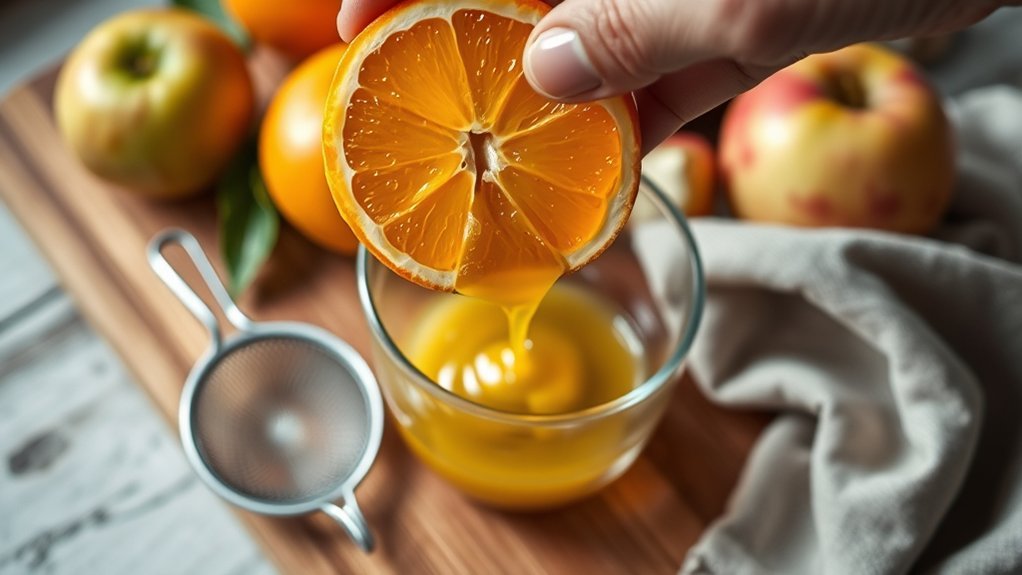
Although citrus fruits may seem tricky to juice without a specialized tool, you can efficiently extract their juice by hand using simple techniques that maximize yield. Start by rolling the fruit firmly to loosen the juice inside.
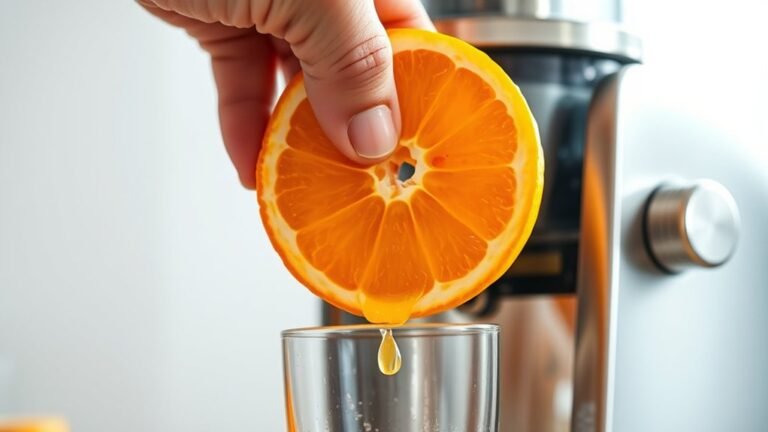
Cut it in half, then use your hand pressing firmly over the cut side while twisting to release juice. Avoid squeezing too hard to prevent bitterness from citrus peelings. Strain the juice through a fine mesh to remove pulp and seeds.
| Step | Action | Tip |
|---|---|---|
| 1 | Roll fruit | Loosens juice inside |
| 2 | Cut in half | Exposes juice sacs |
| 3 | Hand press & twist | Gentle pressure avoids peelings’ bitterness |
| 4 | Strain juice | Removes pulp and seeds |
This method ensures effective hand pressing with minimal effort.
How to Get More Juice From Your Fruits and Veggies
Wondering how to maximize the juice you get from fruits and vegetables without a juicer? Understanding juicing science helps you extract more liquid while preserving nutrient retention.
Follow these steps for efficient manual juicing:
- Warm the produce slightly to loosen juice-filled cells, enhancing yield.
- Cut into smaller pieces to increase surface area for juice release.
- Use a fine mesh strainer or cheesecloth to press and squeeze out maximum liquid.
- Apply consistent, firm pressure rather than rapid squeezing to avoid oxidation and nutrient loss.
Creative Juice Combos You Can Make Without a Juicer
Why settle for plain juice when you can create exciting flavor combinations using just a few simple ingredients and no juicer? Start by blending softer fruits like oranges, strawberries, and ripe mangoes with a bit of water to mimic juice texture. Add grated ginger or a splash of lemon for a natural zing.
For a vegetable boost, combine cucumber, celery, and spinach; these blend smoothly and provide a fresh, green taste. Incorporate herbs like mint or basil for no fry flavoring that enhances complexity without added oil or seasoning.
These creative juice combos not only maximize nutrition but also offer diverse tastes that keep your juice routine interesting. Experimenting with different pairings helps you enjoy homemade juice without specialized equipment, making healthy habits more accessible.
Frequently Asked Questions
How Should I Store Juice Made Without a Juicer?
You should store juice in airtight glass containers, refrigerate promptly, and consume within 24-48 hours to preserve nutrients. Avoid plastic to reduce oxidation, and consider freezing for longer storage, though some nutrient loss may occur.
Can Juicing Without a Juicer Preserve Nutrients?
You won’t lose a mountain of juicing nutrients by manual extraction; if done gently and quickly, it preserves most vitamins and enzymes.
Just avoid heat and oxidation to keep your juice nutrient-packed and fresh.
What Are the Best Cleaning Tips for Juicing Tools?
You should rinse tools immediately to prevent residue buildup, avoid cleaning shortcuts by using warm, soapy water, and maintain blades sharp for tool maintenance.
Regular deep cleaning ensures hygiene and prolongs your juicing tools’ lifespan effectively.
How Long Does Homemade Juice Last in the Fridge?
You should consume homemade juice within 24 to 48 hours in the fridge to minimize age reduction and flavor loss. Beyond that, nutrients degrade, and taste worsens.
Refrigerate in airtight containers to preserve freshness as long as possible.
Are There Any Safety Concerns When Juicing by Hand?
Safety hazards like cuts, contamination, and improper cleaning pose hand juicing risks. You should sanitize tools, handle blades carefully, and wash fruits thoroughly to avoid bacteria, ensuring your juice stays safe and fresh for consumption.
Conclusion
Think of juicing without a juicer like crafting a symphony from simple notes—each fruit and veggie plays its part. By blending and straining, you unleash nature’s essence, much like turning raw ingredients into a fine melody.
With patience and the right techniques, you’ll extract vibrant flavors and nutrients, proving you don’t need fancy tools to compose a rejuvenating, healthy drink.
Your kitchen becomes the stage, and your hands, the maestro’s baton. Juicing without a juicer shows that creativity and care can bring out the best in every ingredient.