Can You Grind Coffee Beans in Blender
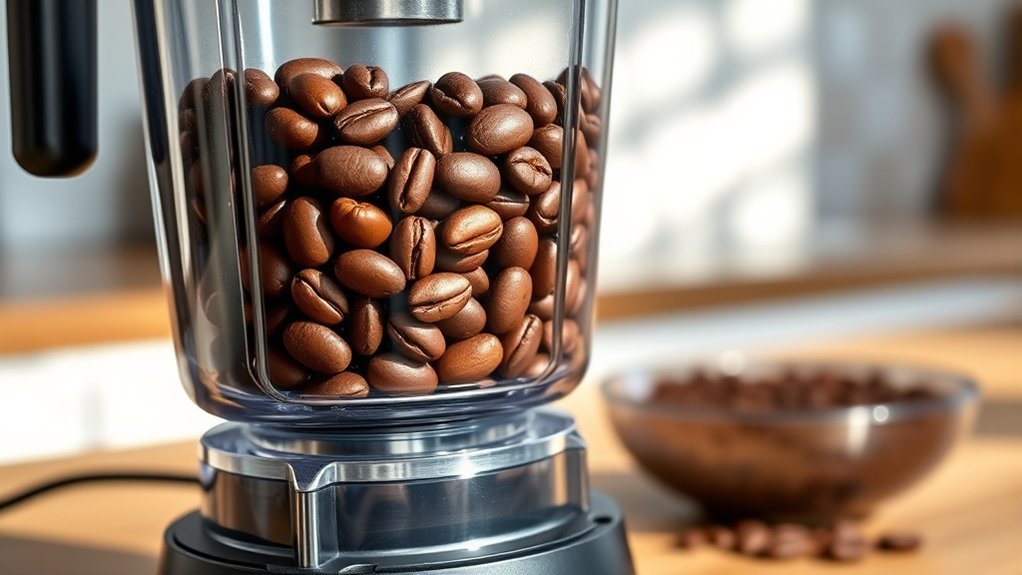
You might be wondering if you can grind coffee beans in a blender when you’re out of options. While it’s possible to grind coffee beans this way, the process isn’t as straightforward as it seems.
Blenders aren’t designed for uniform grinding, and using one could affect your coffee’s flavor and freshness. Before you try, it’s important to understand the limitations and how to get the best results from your blender.
Key Takeaways
- Yes, you can grind coffee beans in a blender, but it results in uneven particle sizes due to blade design and high-speed blades.
- Use short, controlled pulses with rests to minimize heat buildup and preserve flavor oils during grinding.
- Shake the jar between pulses to redistribute beans and check grind texture often for consistency.
- Grinding in small batches at low to medium speed helps reduce overheating and improves grind quality.
- Blender grinding suits basic brewing methods but may cause uneven extraction and flavor loss compared to dedicated coffee grinders.
Can You Grind Coffee Beans Consistently in a Blender?
How consistently can you grind coffee beans in a blender? The short answer is: not very consistently. Blenders typically produce a coarse texture with uneven particle sizes because their blades aren’t designed for uniform grinding. This inconsistency can result in over-extraction or under-extraction during brewing, affecting the final cup’s balance.
Additionally, grinding beans in a blender can generate heat, accelerating flavor loss by causing volatile oils to dissipate prematurely. While you can achieve a basic grind suitable for some brewing methods, expect variability that compromises precision.
If you prioritize consistent grind size to optimize flavor extraction, a blender falls short. However, for occasional, rough grinding where precision isn’t critical, it can suffice, though with inevitable trade-offs in grind uniformity and flavor preservation.
How a Blender Differs From a Coffee Grinder
You’ll notice that blenders and coffee grinders have distinct blade designs tailored for different tasks, which affects grinding consistency. A coffee grinder’s motor power and blade shape work together to produce uniform grounds, while a blender’s setup often results in uneven particle sizes.
Understanding these differences helps you choose the right tool for optimal coffee extraction.
Blade Design Differences
Understanding blade design differences is essential when deciding whether to use a blender for grinding coffee beans. Blenders feature blades with aggressive blade geometry designed for chopping and blending liquids, not for precise grinding.
These blades often lack blade serration, resulting in less grip on the beans and more uneven cuts. In contrast, coffee grinders incorporate serrated blades or burrs engineered specifically to crush beans uniformly without overheating them.
The smooth, sharp edges of blender blades tend to pulverize beans inconsistently, which can affect flavor extraction. When you use a blender, its blade design prioritizes speed and liquid movement rather than controlled, uniform particle size.
Recognizing these distinctions helps you understand why a blender isn’t the ideal tool if you’re aiming for quality coffee grounds.
Grinding Consistency Comparison
Why does grinding consistency matter when comparing a blender to a coffee grinder? Ground consistency directly affects extraction quality and flavor balance in your brew. When you use a coffee grinder, its burr mechanism ensures uniform particle size, giving you predictable results.
A blender, however, relies on high-speed blades that chop beans unevenly. This leads to a mix of coarse chunks and fine powder, causing over- or under-extraction during brewing. So, if you’re weighing blender vs grinder for coffee, understand that blenders can’t match the precision of dedicated grinders.
While blenders might work in a pinch, they lack the control for consistent grounds. For optimal flavor, you want uniformity, something coffee grinders deliver reliably, whereas blenders fall short in maintaining consistent particle size.
Motor Power Impact
Consider how motor power shapes the grinding process when comparing blenders to coffee grinders. Blenders typically boast high motor power designed for blending liquids and solids, but this power lacks symmetry, meaning the force isn’t evenly distributed to crush coffee beans uniformly.
Coffee grinders, in contrast, have motors calibrated specifically for grinding, delivering consistent power symmetry that ensures even particle size. When you use a blender, the uneven power application can cause inconsistent grind textures, affecting extraction quality.
Additionally, noise levels differ significantly; blenders generate louder, more disruptive noise due to their high-speed motors and blade design. Coffee grinders operate more quietly, optimized for short bursts of grinding. Understanding these distinctions helps you decide whether your blender’s motor power suits your coffee grinding needs.
Step-by-Step Guide to Grinding Coffee Beans in a Blender
Start by measuring and drying your coffee beans to ensure even grinding. Set your blender to pulse or low speed to avoid overheating and uneven texture.
Keep checking the grind until you reach the consistency that suits your brewing method.
Preparing Beans Properly
How you prepare your coffee beans directly impacts the quality of your grind when using a blender. Skip unrelated topics and focus on this experimental technique: sort and measure your beans carefully.
Remove debris or damaged beans to avoid uneven grinding. Use room-temperature, dry beans to optimize blade performance.
| Preparation Step | Purpose |
|---|---|
| Sort & Inspect Beans | Ensures uniform grind size |
| Measure Quantity | Prevents overloading blender |
| Use Dry Beans | Avoids clumping and blade damage |
Blender Settings and Speed
When should you adjust your blender’s settings to achieve the perfect coffee grind? Start by selecting a low to medium speed; high speeds generate heat that can damage flavor. Your blender’s blade design significantly impacts grind consistency. Sharp, sturdy blades chop beans uniformly, while dull or curved blades may produce uneven grounds.
Use short pulses rather than continuous blending to prevent overheating and allow you to control grind size better. Monitor the beans after each pulse to ensure even grinding and avoid over-processing. If your blender has multiple speed settings, stick to the lowest effective speed and adjust only if grind consistency suffers.
Properly managing speed and understanding blade design ensures you get a consistent grind without compromising bean quality.
Achieving Desired Grind Texture
Where do you begin to achieve the perfect grind texture using your blender? Start by understanding the two word discussion ideas: “grind consistency” and “pulse control.” These concepts are critical for Subtopic relevance because they directly impact your coffee’s flavor extraction.
Begin by pulsing the blender in short bursts, checking the texture after each. Avoid running the blender continuously to prevent overheating and uneven grinding. For a coarse grind, pulse fewer times; for a fine grind, increase pulse duration and frequency.
You’ll want to shake the blender jar gently between pulses to redistribute beans evenly. Consistently monitor grind size to match your brewing method—coarse for French press, medium for drip, and fine for espresso. This step-by-step approach ensures you achieve your desired grind texture efficiently.
Best Blender Settings for Grinding Coffee Beans
Although blenders aren’t designed specifically for coffee grinding, you can achieve a consistent grind by selecting the right settings. Compared to a grinder comparison, a blender’s variable speed and pulse functions let you control grind size, directly affecting flavor impact.
Blenders aren’t made for coffee grinding, but using the right settings can yield a consistent, flavorful grind.
To get the best results, follow these tips:
- Use short, controlled pulses rather than a continuous blend to avoid overheating and uneven texture.
- Set the speed to medium or low to prevent excessive heat buildup and maintain bean integrity.
- Grind in small batches, stopping to shake or stir the beans between pulses for even distribution.
Tips to Prevent Overheating and Burning Your Coffee Beans
How can you protect your coffee beans from overheating and burning during blending? Use short pulses and let the blender rest between bursts. This cooling method prevents heat buildup, preserving the beans’ oils and flavor impact. Avoid continuous blending, which quickly raises temperature and risks scorching.
| Action | Duration | Effect on Beans |
|---|---|---|
| Pulse 2 seconds | Short bursts | Minimal heat generation |
| Rest 10 seconds | Between pulses | Allows cooling |
| Blend in batches | Small amounts | Even grinding, less heat |
| Use ice cubes | Optional | Rapid cooling |
| Avoid overfilling | Moderate load | Prevents motor strain |
Pros and Cons of Using a Blender for Coffee Grinding
Why consider a blender for grinding coffee beans? It offers convenience and speed, but it’s important to weigh the pros and cons carefully. A blender can quickly break down beans, yet it may impact flavor preservation and cause aroma loss due to heat generation and inconsistent grind size.
Here’s what to keep in mind:
- Pros: Fast grinding, easy access, and multi-purpose use.
- Cons: Uneven grind size affects extraction, heat can degrade flavor, and potential aroma loss.
- Practical tip: Use short pulses to minimize heat buildup and protect your beans’ quality.
Using a blender isn’t ideal for precision grinding, but with careful handling, you can achieve a serviceable grind while understanding its limitations on flavor preservation and aroma retention.
How Blender Grounds Affect Coffee Flavor and Taste
What impact does using a blender have on your coffee’s flavor and taste? When you grind beans in a blender, the inconsistent particle size alters the extraction process, disrupting the delicate flavor chemistry. Larger and smaller grounds brew unevenly, causing bitterness or sourness in your cup.
Additionally, the high-speed blades generate heat, accelerating the loss of bean freshness and volatile aromatic compounds. This compromises the nuanced flavors that define quality coffee. While a blender can produce grounds quickly, it sacrifices precision.
To preserve bean freshness and optimal flavor chemistry, you need a consistent grind size that controls extraction. Using a blender risks masking the coffee’s true profile, so be mindful that flavor clarity and balance often decline when grounds vary widely in size and heat exposure.
Top Alternatives to Grinding Coffee Beans Without a Grinder
Looking for effective ways to grind coffee beans without a dedicated grinder? You have practical options that preserve the coffee aroma and ensure proper bean storage after grinding. Here are top alternatives:
Mortar and Pestle: This manual method lets you control grind size while releasing fresh coffee aroma. It requires patience but excels in precision.
Rolling Pin: Place beans in a sealed bag, then crush them with a rolling pin. It’s quick, keeps beans contained for proper storage, and maintains aroma.
Hammer or Meat Tenderizer: Wrap beans in a towel, then gently crush with a hammer. This coarse grind is suitable for French press and retains much of the beans’ fragrance.
Each method balances convenience with quality, ensuring you get great flavor even without a grinder.
Frequently Asked Questions
Can I Grind Other Spices in the Blender Like Coffee Beans?
Yes, you can grind spices in your blender, but make sure to clean it thoroughly between uses to avoid flavor cross-contamination.
Always follow blender safety guidelines to prevent overheating or damaging the blades while grinding tough spices.
How Long Do Coffee Beans Stay Fresh After Grinding?
You’ll maintain grind freshness for about 15 to 30 minutes; after that, the flavor starts fading. For ideal storage timing, grind just before brewing and keep beans airtight, away from light, heat, and moisture.
Does the Blender Noise Affect Coffee Flavor?
No, the blender noise itself doesn’t affect flavor. However, inconsistent grind consistency caused by uneven blending can hinder proper flavor extraction, leading you to experience a less balanced and underwhelming coffee taste.
Can I Use Frozen Coffee Beans in a Blender?
You can use frozen coffee beans in a blender, but expect louder noise due to harder beans. To preserve flavor, grind quickly and avoid overheating.
Blender noise might increase, but it won’t ruin your coffee’s taste.
What Is the Best Coffee Bean Roast for Blending?
The best roast options for flavor blending are medium and medium-dark roasts. They offer balanced acidity and rich flavor, allowing you to create complex blends without overpowering bitterness or sourness. This makes them perfect for versatile coffee profiles.
Conclusion
Grinding coffee beans in your blender might feel like wrestling a wild beast—unpredictable, noisy, and a bit messy. While it won’t deliver the silky, even grind of a dedicated coffee grinder, you can still coax decent grounds with care. Just pulse gently, avoid overheating, and embrace the rustic charm of your homemade brew.
Remember, your blender’s a multitasking warrior, not a precision grinder. So manage expectations and savor the unique character it brings.
If you’re wondering, can you grind coffee beans in blender? The answer is yes, but with some patience and caution to get the best results.