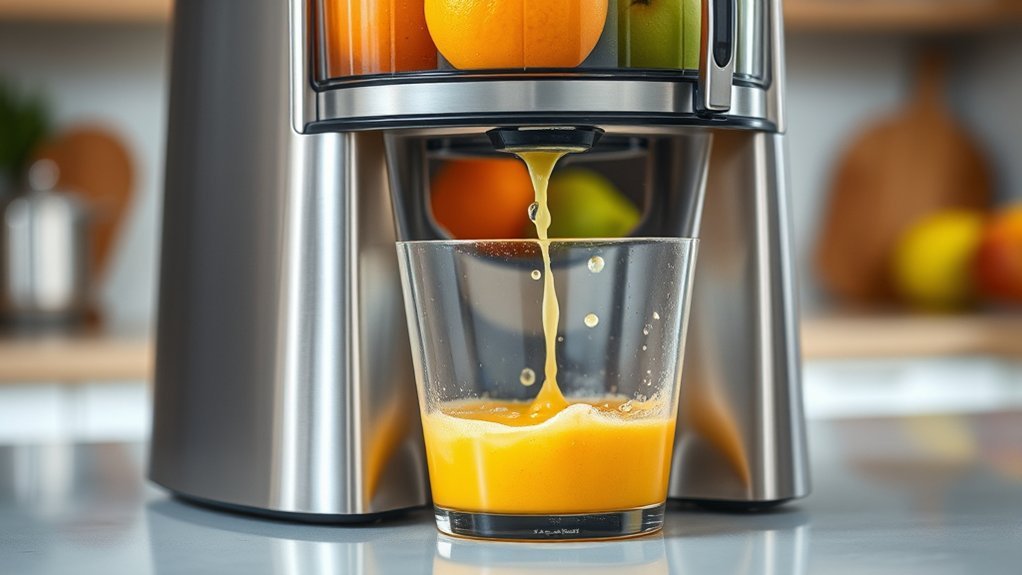
How Does Juicer Work
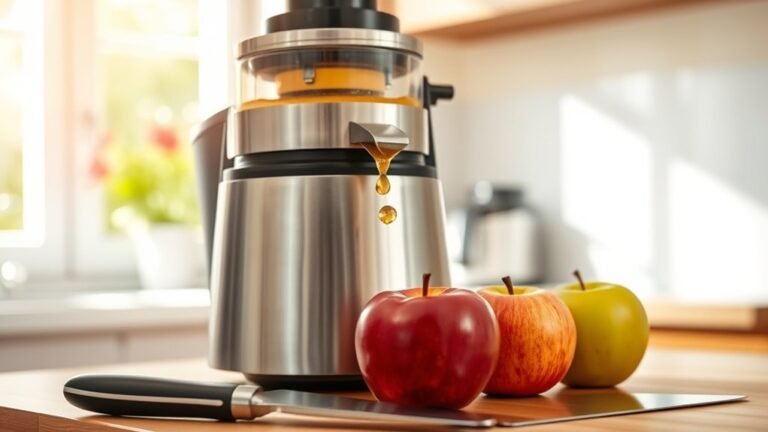
Imagine pressing a cluster of fresh fruits and vegetables with a juicer, watching their vibrant juices flow as cell walls break down under mechanical force. When you use a juicer, you’re harnessing specific mechanisms—whether a high-speed spinning disc or a slow, grinding auger—to separate liquid from fibrous pulp efficiently.
Understanding these processes can help you optimize juice extraction. The details of how each type works will reveal why some juicers suit certain ingredients better than others.
Key Takeaways
- Juicers break down plant cell walls to release juice using mechanical force like grinding, pressing, or shredding.
- Centrifugal juicers spin produce rapidly against a shredding disc and mesh filter to separate juice from pulp.
- Masticating juicers crush and press produce slowly with an auger to extract juice while minimizing heat and oxidation.
- Juicer type suitability depends on produce texture, with centrifugal juicers for soft fruits and masticating or triturating juicers for fibrous vegetables.
- Efficient juicing maximizes juice yield and nutrient retention by controlling speed, pressure, and minimizing exposure to air and heat.
What Is Juicing and How Does Juice Extraction Work?
How exactly does juicing transform whole fruits and vegetables into liquid form? Juicing basics rely on breaking down plant cell walls to release the internal liquid. You apply mechanical force, whether through grinding, pressing, or crushing, to separate juice from fibrous pulp.
Juice extraction principles focus on maximizing yield while preserving nutrients and minimizing oxidation. When you process produce, cellular structures rupture, allowing juice to flow freely.
Efficient extraction involves controlling pressure and speed to optimize liquid release without generating excessive heat, which could degrade sensitive compounds. Understanding these fundamentals helps you select appropriate methods and equipment for different produce types.
How Does a Centrifugal Juicer Extract Juice?
Although centrifugal juicers operate on a simple mechanical principle, their design efficiently separates juice from pulp by rapidly spinning produce against a sharp shredding disc. You’ll notice how centrifugal mechanics play a crucial role in optimizing juice yield through this process.
Centrifugal juicers use rapid spinning to efficiently separate juice from pulp, enhancing juice yield.
Here’s how it works:
- You feed fruits or vegetables into the chute, where the shredding disc spins at high speed.
- The disc’s sharp edges finely shred the produce, breaking down cell walls.
- Centrifugal force propels the shredded material against a perforated mesh filter.
- Juice passes through the mesh, while pulp is captured separately.
This rapid spinning and filtering maximize juice extraction efficiency, allowing you to get a high juice yield from various produce in seconds.
How Does a Masticating Juicer Work?
Why does a masticating juicer operate at a slower speed compared to centrifugal models? The answer lies in its extraction process. Unlike centrifugal juicers that rely on high-speed spinning, masticating juicers use a slow, grinding action to crush and press produce.
This controlled speed enhances masticating efficiency by minimizing heat and oxidation, preserving nutrients and enzymes. The omega juicer mechanics exemplify this: an auger slowly rotates to shred fruits and vegetables, then presses the pulp against a mesh screen, extracting maximum juice.
This method yields higher juice quality and quantity, especially from leafy greens. By understanding these mechanics, you see why masticating juicers prioritize thorough extraction over speed, delivering nutrient-rich juice through a precise, low-speed process.
Which Juicer Works Best for Different Fruits and Vegetables?
Which juicer suits your produce depends largely on the texture and moisture content of the fruits and vegetables involved. To select the optimal juicer, consider these equipment comparisons based on fruit variety:
- Soft fruits (berries, grapes): Centrifugal juicers work efficiently due to high moisture content.
- Hard vegetables (carrots, beets): Masticating juicers excel by slowly crushing fibers, maximizing juice extraction.
- Leafy greens (spinach, kale): Triturating juicers handle fibrous leaves better, preserving nutrient content.
- Citrus fruits (oranges, lemons): Dedicated citrus juicers provide targeted extraction without excess pulp.
How to Maximize Juice Yield and Nutrient Retention With Your Juicer
How can you ensure your juicer extracts the maximum amount of juice while preserving valuable nutrients? To maximize yield and nutrient retention, start by understanding juicing basics, including the type of produce and juicer mechanism.
Use a slow, cold-press juicer to reduce heat and oxidation, which degrade nutrients. Prepare ingredients properly by cutting into uniform pieces to optimize extraction science principles, ensuring efficient cell breakdown.
Avoid overloading the juicer, as this can reduce efficiency and increase heat. Process leafy greens and fibrous vegetables in combination with watery fruits to improve yield.
Immediately consume or refrigerate juice to minimize nutrient loss from exposure to air and light. By applying these precise techniques, you’ll optimize juice volume and preserve vital vitamins and enzymes effectively.
Frequently Asked Questions
How Do I Clean My Juicer Effectively?
You clean your juicer effectively by disassembling parts immediately, soaking them in warm soapy water, scrubbing with a brush, and drying thoroughly.
Follow cleaning tips and maintenance routines to prevent residue buildup and ensure optimal performance.
Are Juicers Noisy During Operation?
Yes, juicers can be noisy during operation due to the juicer motor’s speed and design. However, many models incorporate noise reduction technologies to minimize disruption. You should check specifications for quieter performance options.
Can Juicers Handle Leafy Greens Well?
Like a well-oiled machine, your juicer handles leafy greens with precision, optimizing juicing efficiency while balancing safety features and noise levels. It guarantees smooth extraction without clogging or excessive sound during operation.
What Safety Features Do Juicers Have?
Juicers include safety features like locking mechanisms, overload protection, and automatic shutoff to ensure juicing safety. These prevent operation without secure assembly, motor overheating, and accidental starts. They protect you during juicing sessions effectively.
How Long Do Juicer Parts Typically Last?
Think of your juicer parts as the engine’s heart, with a durability lifespan typically spanning 3 to 5 years. You’ll need timely part replacement to maintain peak performance and avoid mechanical wear or failure.
Conclusion
Now that you understand juicer mechanics, consider this: centrifugal juicers can spin up to 15,000 RPM to rapidly separate juice. However, their speed may generate heat that reduces nutrient retention.
Masticating juicers operate slower, preserving more enzymes and yielding up to 20% more juice from leafy greens. By selecting the right juicer and prepping ingredients properly, you optimize extraction efficiency and nutrient preservation.
This ensures every drop you get is both rich and fresh. Understanding how does juicer work helps you make the best choice for your health and taste preferences.