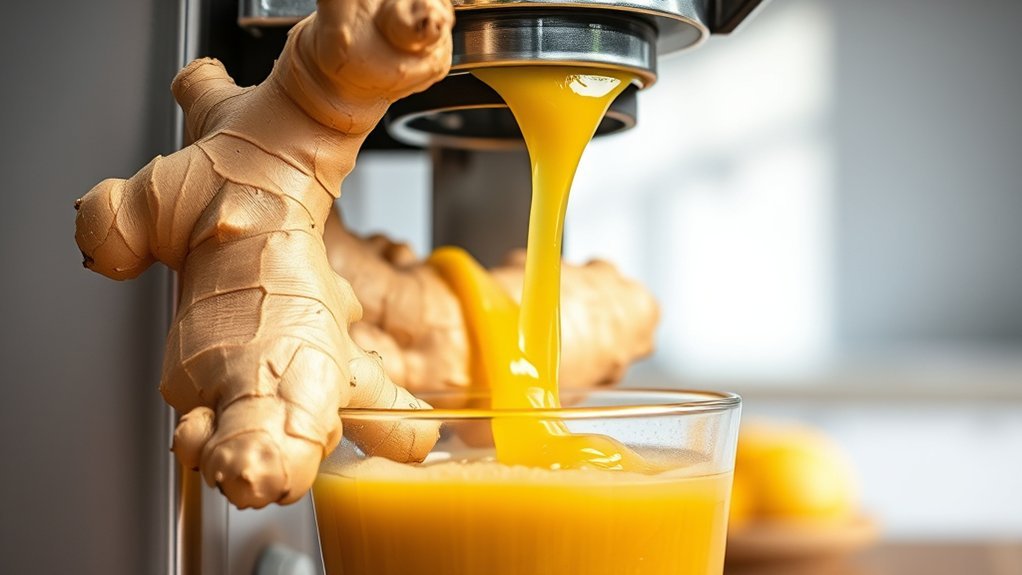
How to Juice Ginger With a Juicer
If you want to juice ginger with a juicer and get the most from fresh ginger, it’s important to prepare it correctly and choose the right machine.
Peeling ginger with a spoon preserves more flesh, and feeding small pieces slowly prevents motor strain.
Using a slow juicer helps retain flavor and nutrients, but there are also tricks to enhance taste and avoid common issues.
Understanding these steps can make your ginger juice fresher and more enjoyable.
Key Takeaways
- Thoroughly wash and peel ginger using a spoon, then cut into small pieces that fit your juicer’s feed chute.
- Use a slow masticating juicer with a powerful motor to maximize juice extraction and preserve nutrients.
- Feed ginger pieces slowly into the juicer to prevent clogging and ensure efficient juice yield.
- Collect juice in a clean container and clean the juicer immediately after use with warm water and mild detergent.
- Store leftover ginger juice in an airtight container in the refrigerator for up to three days to maintain freshness.
Best Juicers for Juicing Ginger
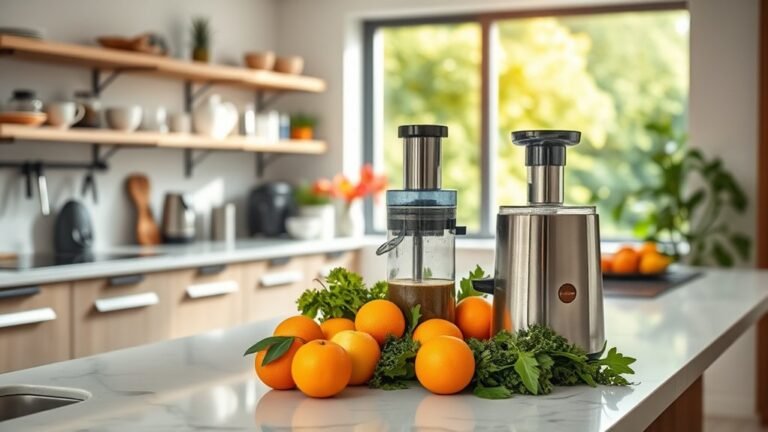
When choosing the best juicer for ginger, what features should you prioritize? Look for a juicer with a powerful motor and slow masticating action, as these extract maximum juice while preserving nutrients.
Choose a juicer with a powerful motor and slow masticating action for maximum juice and nutrient preservation.
Consider ease of cleaning, since ginger’s fibrous texture can clog machines. Also, ensure the juicer handles small, tough roots efficiently.
Proper ginger storage directly impacts juicing quality; fresh, firm ginger stored in a cool, dry place or refrigerated lasts longer, maintaining flavor and juice yield.
When sourcing ginger, pick firm, smooth-skinned roots without wrinkles or mold for the best results.
Prioritize juicers that allow you to process fresh ginger quickly and smoothly to maximize nutrient retention and flavor intensity, ensuring your juice is both potent and delicious.
How to Prepare Fresh Ginger for Juicing
How exactly should you prepare fresh ginger to get the most juice and flavor? First, wash the ginger thoroughly to remove dirt, ensuring ginger safety by preventing contaminants. Next, peel the skin using a spoon to avoid losing too much flesh, maintaining flavor balance.
Cut the ginger into smaller pieces that fit your juicer’s feed chute. This helps the juicer extract juice efficiently without clogging.
| Step | Tip |
|---|---|
| Wash | Use cold water, scrub gently |
| Peel | Use a spoon, avoid knives |
| Cut | Small, uniform pieces |
| Check freshness | Firm texture, no mold |
| Avoid additives | No preservatives or wax |
This preparation maximizes juice yield while preserving ginger’s natural flavor and safety.
How to Juice Ginger Step-by-Step
Why start juicing ginger without a clear plan? First, ensure your ginger is properly prepared and peeled. Cut it into small pieces that fit your juicer’s feeding chute.
Next, feed the ginger slowly into the juicer, allowing the machine to extract maximum juice without overloading. Collect the juice in a clean container.
Once finished, immediately perform juicer cleanup to prevent ginger residue from drying and affecting performance. Use warm water and mild detergent to clean all removable parts thoroughly.
For ginger storage, keep unused ginger in an airtight container in the refrigerator to maintain freshness. Following these steps helps you efficiently juice ginger while preserving equipment longevity and ginger quality for your next use.
Tips to Get More Juice and Better Flavor
To get the most juice and best flavor, start by peeling and chopping your ginger into smaller pieces to help your juicer work efficiently. Adjusting your juicer’s settings, like speed and pressure, can also improve extraction without overheating the ginger.
These simple steps ensure you maximize both yield and taste every time.
Preparing Ginger Properly
Properly preparing ginger before juicing considerably boosts both the yield and the flavor intensity. Start by selecting fresh ginger with smooth skin and firm texture; older ginger tends to be fibrous and yields less juice.
Peel the ginger using a spoon to avoid removing too much flesh, preserving valuable oils that enhance flavor. Cutting it into smaller pieces helps your juicer extract more juice efficiently.
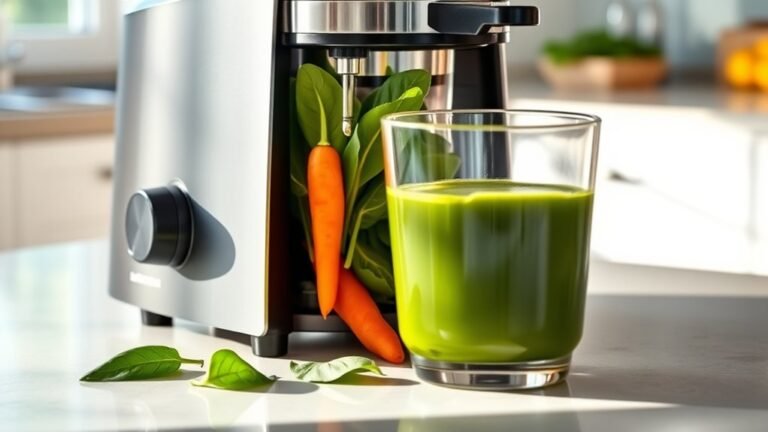
For best results, store ginger in an airtight container in the refrigerator to maintain freshness and prevent drying out. When considering flavor pairing, combine ginger with citrus fruits or carrots to complement its spicy, zesty notes.
Proper preparation and storage ensure your juice not only tastes better but also maximizes the health benefits packed in ginger’s potent compounds.
Optimizing Juicer Settings
How can you maximize both the quantity and quality of your ginger juice using your juicer’s settings? Start by selecting the appropriate speed. Lower speeds often preserve flavor and reduce heat buildup, which can degrade ginger’s delicate compounds.
Juicing science shows that slower masticating juicers extract more nutrients and yield richer flavor compared to fast centrifugal models. Experiment with two word discussion ideas like “speed adjustment” and “pulp control” to fine-tune your process.
Adjusting the pulp ejection setting, if available, can help you balance juice clarity and yield. Also, feed ginger pieces steadily, avoiding overloading to prevent clogging and maintain consistent extraction.
How to Fix Common Ginger Juicing Problems
If your juicer clogs while processing ginger, try cutting the root into smaller pieces to improve flow and reduce blockages. You can also alternate ginger with softer fruits or vegetables to help clear the machine.
These steps will help you maximize juice yield and keep your juicer running smoothly.
Prevent Juicer Clogging
Why does your juicer often clog when processing ginger? Ginger’s fibrous texture and high cellulose content can easily block juicer screens and augers. To prevent clogging, cut ginger into smaller pieces before juicing; this reduces strain on your machine.
Also, alternate ginger with softer fruits or vegetables to keep the pulp moving smoothly. Regularly clean your juicer during use to avoid buildup, which improves ginger juicing safety by preventing motor overheating.
Using a slow-speed or masticating juicer specifically designed for tough fibers further reduces clogging risks. Finally, avoid overloading the juicer with large amounts of ginger at once. These evidence-based steps help you maintain efficient juicer function and ensure a safer, hassle-free ginger juicing experience.
Maximize Ginger Juice Yield
What steps can you take to get the most juice from your ginger? First, peel your ginger thoroughly to remove the tough outer skin, which can reduce juice yield.
Cut the ginger into smaller pieces; this helps your juicer extract more liquid efficiently. Avoid overloading the juicer to prevent clogging and ensure consistent pressure for maximum extraction.
If you experience any irritation or suspect a ginger allergy, stop juicing immediately and consult a healthcare professional.
After juicing, store the ginger juice in an airtight container in the refrigerator to preserve its freshness and potency for up to three days. By following these tips, you’ll maximize your ginger juice yield, improve juice quality, and avoid common problems related to juicing ginger.
Fun Ways to Use Fresh Ginger Juice
Fresh ginger juice offers a versatile boost to your culinary and wellness routines. Its sharp, zesty flavor enhances dishes and drinks while providing anti-inflammatory benefits.
To explore ginger fusion ideas, try adding fresh ginger juice to smoothies or salad dressings for a vibrant kick. You can also experiment with ginger dessert twists by mixing it into syrups, custards, or fruit salads to balance sweetness with spice.
Beyond cooking, fresh ginger juice can be used in:
- Homemade detox drinks to support digestion and immunity
- Marinades for meats and tofu, tenderizing while adding depth
- DIY skincare remedies for its antioxidant and soothing properties
Frequently Asked Questions
Can Ginger Juice Help With Digestion?
Yes, ginger juice can help with digestion benefits by reducing nausea and improving gut motility. You should stick to a moderate ginger dosage, about 1 to 2 grams daily, to avoid side effects and maximize digestive support.
Is Ginger Juice Safe During Pregnancy?
You can safely consume ginger juice during pregnancy in moderation, but watch for ginger safety guidelines. Always consult your healthcare provider first, as pregnancy considerations vary.
Excessive amounts might cause side effects or interfere with medications.
How Long Does Ginger Juice Last in the Fridge?
You might worry ginger juice spoils quickly, but with proper ginger storage, its juice shelf life extends up to 3-4 days in the fridge.
Keep it sealed tightly to maintain freshness and potency effectively.
Can I Freeze Ginger Juice for Later Use?
Yes, you can freeze ginger juice for later use. To maintain freshness, freeze it in small, airtight containers or ice cube trays.
These storage tips help preserve flavor and nutrients effectively for several months.
Does Ginger Juice Interact With Medications?
Yes, ginger interactions with some medications can occur, especially blood thinners. You should discuss medication timing with your doctor to avoid risks.
Always inform healthcare providers about your ginger juice intake to ensure safe use.
Conclusion
Now that you know how to juice ginger like a pro, it’s time to let your juicer do the heavy lifting. By prepping ginger properly and juicing slowly, you’ll squeeze out every drop of flavor and nutrients.
Don’t forget to pair it with citrus or carrots for a taste boost. With these tips, juicing ginger becomes as easy as pie.
Your body will thank you with every refreshing sip of ginger juice. Mastering how to juice ginger with a juicer ensures you get the most out of this powerful root.