How to Make Beetroot Juice Without Juicer
Making beetroot juice without a juicer might seem like solving a puzzle, but it’s a straightforward process you can master quickly. You don’t need specialized equipment to enjoy fresh beetroot juice at home. By using common kitchen tools like a blender or even a grater and cloth, you can extract nutrient-rich juice efficiently.
Understanding these methods can open the door to healthier habits in a practical way. Here’s how you can get started.
Key Takeaways
- Chop fresh beetroots into small pieces and blend with water for easy extraction without a juicer.
- Strain blended beet pulp through a fine mesh sieve or cheesecloth for smooth juice.
- Use grated beetroot wrapped in cloth, then squeeze manually over a bowl to extract juice.
- Add flavor enhancers like lemon, ginger, or apple juice to improve taste and nutritional value.
- Store juice in airtight containers, refrigerate, and consume within 48 hours for best freshness and nutrients.
Why Choose Beetroot Juice Without a Juicer
Why opt for beetroot juice without a juicer? You might not have a juicer at hand, or you prefer a method that’s simple and cost-effective. When you discuss sourcing, choosing fresh, organic beetroots ensures maximum nutrient retention, essential for nutrition benefits.
Some debate nutrition around juicing methods, but evidence shows that manually extracting juice preserves fiber better than some machines, which can overheat and degrade sensitive nutrients like vitamin C and folate. Also, juicing without a juicer lets you control the texture and avoid additives often found in store-bought juices.
This approach gives you a fresh, pure product while saving money and kitchen space. So, opting out of a juicer can be both practical and nutritionally sound, depending on your preferences and resources.
How to Prepare Beetroot for Juicing
You’ll want to start by selecting fresh, firm beetroots with smooth skin for the best juice quality. Thoroughly wash and peel them to remove dirt and any bitter outer layers.
Then, cut the beets into small pieces to make the juicing process easier without a machine.
Selecting Fresh Beetroots
Choosing fresh beetroots is essential for making flavorful and nutritious juice without a juicer. When selecting beetroots, look for firm, smooth-skinned roots with deep, vibrant color, as these indicate high nutrient content and freshness. Avoid soft spots or wrinkles, which signal age or spoilage.
Opt for medium-sized beets, as larger ones may be woody and less sweet. While selecting beetroots, avoid greens if you’re not planning to use them, since wilted or yellowing leaves often indicate older roots. However, if the greens appear fresh and crisp, they can be a nutritious addition to your juice.
Prioritizing fresh, high-quality beets will improve both the taste and health benefits of your homemade juice, ensuring a rich, natural flavor even without a juicer.
Washing and Peeling Tips
How should you wash and peel beetroots to maximize their flavor and nutrient retention? Start by rinsing the beets under cold running water to remove dirt and debris without bruising the skin, which helps preserve the vibrant beet color rich in antioxidants. Use a vegetable brush gently if needed.
For peeling, wait until after washing and cutting to reduce handling stains and minimize nutrient loss. If you prefer peeling beforehand, use a paring knife or vegetable peeler, taking care to avoid cutting too deep, as much of the nutrients lie just beneath the skin.
Always follow kitchen safety practices: secure the beet on a stable surface, keep your fingers clear of blades, and wear gloves if staining is a concern. This approach ensures clean, nutrient-rich beets ready for juicing.
Cutting for Easy Juicing
Once your beets are clean and peeled, the next step is cutting them into manageable pieces that will make juicing easier and more efficient. Proper beetroot cutting ensures even extraction and reduces strain when using equipment alternatives like blenders or graters.
Cut the beetroot into small cubes or thin slices, ideally around 1-inch pieces, to maximize surface area.
| Cutting Technique | Piece Size | Equipment Alternatives |
|---|---|---|
| Cubing | 1-inch cubes | Blender, Food processor |
| Slicing | 1/4-inch slices | Manual grater, Knife |
| Dicing | Small cubes | Mortar and pestle |
| Julienne | Thin strips | Mandoline, Knife |
| Chopping | Irregular pieces | Blender, Manual juicer |
Choosing the right cutting method optimizes juice yield without a juicer.
How to Juice Beetroot With a Blender
Wondering how to extract fresh beetroot juice without a juicer? Using a blender is a practical alternative. Start by chopping your beetroot into small pieces. This helps the blades work efficiently.
Add a little water to facilitate blending; about half a cup per beetroot works well. Blend on high speed until you get a smooth mixture.
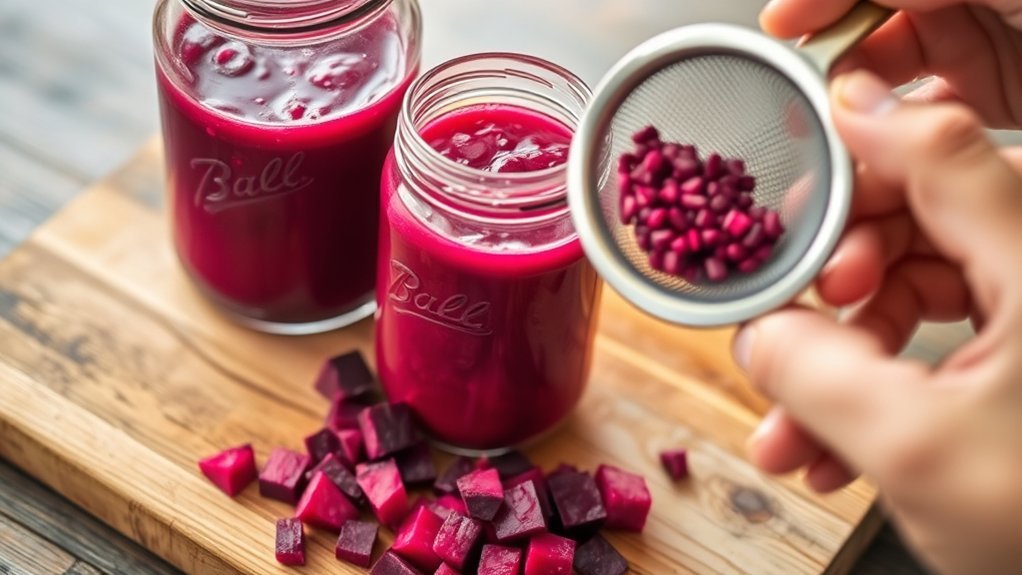
For clearer juice, strain the pulp using a fine mesh sieve or cheesecloth. Here are two word ideas to keep in mind: “pulp separation.” This step guarantees you get smooth juice without fibrous bits.
Remember these blender tips: pulse initially to break down tough chunks, then blend continuously for a consistent texture. This method preserves nutrients and gives you fresh beetroot juice quickly and easily.
How to Juice Beetroot Using a Grater and Cloth
If you don’t have a blender handy, you can still extract fresh beetroot juice using simple kitchen tools like a grater and a cloth. Start by thoroughly washing and peeling the beetroot to remove dirt and impurities.
Use a fine grater to shred the beetroot into small pieces, which increases the surface area and helps release more juice. Next, place the grated beetroot into a clean, sturdy cloth, preferably a muslin or cheesecloth.
Fold the cloth tightly and squeeze it firmly over a bowl to extract the juice. Avoid off topic discussions like adding other ingredients now; focus solely on juice extraction. These two word ideas, “grated beetroot,” are key in optimizing juice yield without a juicer, making this method effective and straightforward.
How to Strain and Store Fresh Beetroot Juice
Once you’ve extracted the juice, use a fine mesh strainer or cheesecloth to remove any pulp for a smooth texture.
Store the juice in an airtight glass container to preserve freshness and nutrients. Keep it refrigerated and consume within 48 hours for the best taste and health benefits.
Effective Juice Straining Methods
How do you ensure your fresh beetroot juice is smooth and free of pulp without a juicer? Start by using fine mesh strainers or cheesecloth to separate the juice from the pulp effectively. After blending your beetroot, pour the mixture into the strainer placed over a bowl and press gently with a spoon to extract maximum liquid.
For finer filtration, fold a cheesecloth into layers and strain again, reducing sediment. These techniques brainstorm practical alternatives to conventional juicers, highlighting efficient, low-cost methods. Considering marketing angles, emphasizing natural, hands-on juicing appeals to health-conscious consumers who appreciate DIY approaches.
Best Storage Practices
Where should you store your freshly strained beetroot juice to maintain its vibrant flavor and nutritional benefits? The best practice is to use airtight juice containers, preferably glass bottles, which prevent oxidation and preserve nutrients longer. Avoid plastic containers, as they can leach chemicals and affect taste.
For optimal beetroot storage, keep the juice refrigerated immediately after straining. Studies show that beetroot juice retains most antioxidants and vitamins when stored at 4°C and consumed within 48 hours.
If you need to store it longer, freezing in small, sealed portions is effective but may alter texture slightly upon thawing. Always strain the juice thoroughly using a fine mesh or cheesecloth before storage to remove pulp, which can ferment and spoil the juice faster.
Proper storage ensures you enjoy fresh, nutrient-rich beetroot juice every time.
How to Enhance Beetroot Juice With Flavor Boosters
Adding flavor boosters to beetroot juice can considerably improve its taste and nutritional profile. You can balance the earthy beet flavor by mixing in fresh lemon or orange juice, which adds a refreshing citrus note and vitamin C.
Ginger and cinnamon serve as excellent spice boosters, enhancing both flavor and antioxidant content. A pinch of black pepper not only complements the spice profile but also increases the bioavailability of beetroot’s nitrates, improving cardiovascular benefits.
To add natural sweetness without overwhelming the beet flavor, try blending in apple or carrot juice, which also contribute additional vitamins and fiber. These simple additions make your homemade beetroot juice more enjoyable and nutritious, encouraging regular consumption for its proven health advantages.
Frequently Asked Questions
Can Beetroot Juice Help Improve Athletic Performance?
Yes, beetroot juice offers beetroot benefits that support athletic enhancement by improving blood flow and oxygen delivery.
You’ll notice better endurance and performance, thanks to its high nitrate content, which scientific studies consistently confirm.
Is Beetroot Juice Safe for People With Low Blood Pressure?
Beetroot safety is generally good, but if you have low blood pressure concerns, you should be cautious.
Beetroot juice can lower blood pressure further, so consult your doctor before drinking it regularly to avoid adverse effects.
How Long Does Fresh Beetroot Juice Stay Good in the Fridge?
You can keep beetroot juice fresh in the fridge for up to 3 days. For best beetroot storage, use an airtight container to maintain fridge freshness and prevent oxidation, ensuring nutrients and flavor stay intact.
Can Beetroot Juice Stain Teeth or Clothes?
Yes, beetroot juice can stain your teeth and clothes due to its strong pigments. For beetroot safety, rinse immediately if stained.
Proper juice storage in sealed containers helps prevent spills and stains, keeping things clean.
Are There Any Side Effects of Drinking Beetroot Juice Daily?
They say, “Too much of anything is bad.” Daily consumption of beetroot juice can cause side effects like low blood pressure, stomach upset, or kidney stones.
Conclusion
Making beetroot juice without a juicer is easier than you might think. Whether you use a blender or a grater and cloth, you’ll extract fresh, nutrient-packed juice with minimal effort. Like turning simple ingredients into a vibrant masterpiece, this process lets you enjoy all the health benefits without extra gadgets.
Just strain the mixture, store it properly, and add flavors like lemon or ginger to suit your taste. These simple steps ensure you get delicious, fresh juice every time. No fancy equipment is needed to enjoy this refreshing drink.
With these easy methods, you’ll have fresh beetroot juice ready anytime you want. Making beetroot juice without a juicer is a convenient way to boost your nutrition and enjoy the natural goodness of beets.